- English
- Chinese
- French
- German
- Portuguese
- Spanish
- Russian
- Japanese
- Korean
- Arabic
- Irish
- Greek
- Turkish
- Italian
- Danish
- Romanian
- Indonesian
- Czech
- Afrikaans
- Swedish
- Polish
- Basque
- Catalan
- Esperanto
- Hindi
- Lao
- Albanian
- Amharic
- Armenian
- Azerbaijani
- Belarusian
- Bengali
- Bosnian
- Bulgarian
- Cebuano
- Chichewa
- Corsican
- Croatian
- Dutch
- Estonian
- Filipino
- Finnish
- Frisian
- Galician
- Georgian
- Gujarati
- Haitian
- Hausa
- Hawaiian
- Hebrew
- Hmong
- Hungarian
- Icelandic
- Igbo
- Javanese
- Kannada
- Kazakh
- Khmer
- Kurdish
- Kyrgyz
- Latin
- Latvian
- Lithuanian
- Luxembou..
- Macedonian
- Malagasy
- Malay
- Malayalam
- Maltese
- Maori
- Marathi
- Mongolian
- Burmese
- Nepali
- Norwegian
- Pashto
- Persian
- Punjabi
- Serbian
- Sesotho
- Sinhala
- Slovak
- Slovenian
- Somali
- Scots Gaelic
- Shona
- Sindhi
- Sundanese
- Swahili
- Tajik
- Tamil
- Telugu
- Thai
- Ukrainian
- Urdu
- Uzbek
- Vietnamese
- Welsh
- Xhosa
- Yiddish
- Yoruba
- Zulu
- Kinyarwanda
- Tatar
- Oriya
- Turkmen
- Uyghur

Darul Hana Bridge Musical Fountain: Engineering Insights and Design Analysis
2026-11-10
- Introduction to the Darul Hana Bridge Musical Fountain
- Structural Engineering Considerations for Bridge-Mounted Fountains
- Hydraulic System Design and Performance
- Control Systems and Synchronization Technology
- Environmental Sustainability and Ecological Design
- Material Selection and Corrosion Resistance
- Project Execution and Professional Expertise
- Maintenance and Operational Best Practices
- Conclusion
Summary The Darul Hana Bridge Musical Fountain represents a sophisticated integration of civil engineering, hydraulic dynamics, and aesthetic lighting design. This analysis explores the structural adaptations required for bridge-mounted water features, the synchronization technologies enabling precise choreography, and the environmental considerations essential for sustainable urban waterscapes. By examining the technical challenges of vibration control, corrosion resistance, and energy efficiency, this article provides valuable insights for engineers, urban planners, and procurement specialists involved in landmark infrastructure projects.
Introduction to the Darul Hana Bridge Musical Fountain
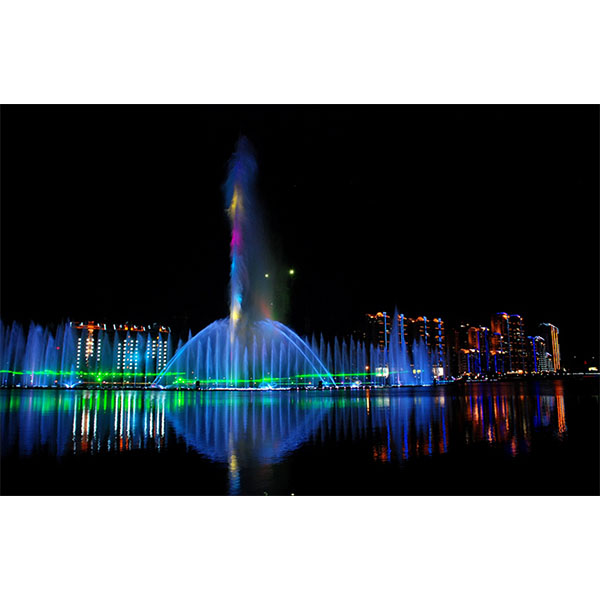
The darul hana bridge musical fountain stands as a testament to the evolving role of public infrastructure in modern urban planning. No longer merely functional conduits for transportation, bridges like the Darul Hana have become cultural landmarks, integrating artistic elements that enhance the civic experience. The addition of a musical fountain system transforms the structure into a dynamic visual and auditory spectacle, attracting tourism and fostering community engagement.
However, the implementation of such a complex waterscape on a bridge structure involves significant engineering hurdles. Unlike ground-based fountains, bridge-mounted systems must account for structural load limits, vibration transmission, and exposure to harsh environmental conditions. This article delves into the engineering insights and design analysis necessary to understand how such a project is conceived, executed, and maintained. It serves as a technical reference for professionals seeking to understand the intersection of hydraulic engineering and architectural aesthetics.
Structural Engineering Considerations for Bridge-Mounted Fountains
Integrating a musical fountain into a bridge structure requires a rigorous approach to structural integrity. The primary challenge lies in balancing the aesthetic desire for dramatic water displays with the physical limitations of the bridge itself.
Load Distribution and Weight Management
Water is heavy, with a density of approximately 1,000 kg per cubic meter. A musical fountain system includes not only the water in the air but also the submerged pumps, piping networks, nozzles, and control cabinets. Engineers must calculate the dead load (static weight of equipment) and live load (dynamic weight of water during operation) to ensure the bridge deck can support the additional stress.
In the context of the darul hana bridge musical fountain, design teams typically employ lightweight materials for non-structural components. Stainless steel piping, often grade 316L for its superior corrosion resistance, is preferred over heavier alternatives. Furthermore, the placement of pumps and reservoirs is strategically planned to distribute weight evenly across support pillars or reinforced sections of the deck, avoiding concentrated loads that could compromise structural safety.
Vibration Control and Dynamic Stability
Musical fountains operate by rapidly changing water pressure and flow rates to synchronize with music. This creates dynamic forces that can induce vibrations. On a bridge, which is already subject to traffic-induced and wind-induced vibrations, adding another source of oscillation requires careful mitigation.
Engineering solutions include:
- Isolation Mounts: Pumps and motors are installed on vibration-damping mounts to prevent mechanical vibrations from transferring to the bridge structure.
- Flexible Couplings: These are used in piping systems to absorb shock and prevent rigid transmission of pressure pulses.
- Computational Fluid Dynamics (CFD): Advanced simulations are used to model water jet trajectories and their reactive forces, ensuring that the thrust generated by high-pressure nozzles does not destabilize the installation.
Wind Load and Water Drift
Bridges are often exposed to higher wind speeds than ground-level sites. Wind can disperse water mist, causing drift onto pedestrian walkways or road surfaces, creating slip hazards. Designers must analyze local wind patterns and adjust nozzle angles and pressures accordingly. In some cases, wind sensors are integrated into the control system to automatically reduce jet heights during high-wind conditions, ensuring public safety and operational continuity.
Hydraulic System Design and Performance
The heart of any musical fountain is its hydraulic system. For the darul hana bridge musical fountain, the hydraulic design must be both powerful enough to create impressive visuals and efficient enough to remain sustainable.
Pump Selection and Configuration
High-pressure centrifugal pumps are the standard choice for musical fountains due to their ability to deliver consistent flow rates at varying pressures. The configuration often involves a combination of main circulation pumps and specialized booster pumps for specific effect nozzles.
Key considerations in pump selection include:
- Energy Efficiency: Modern projects prioritize IE3 or IE4 class motors to reduce operational costs.
- Redundancy: Critical systems may include backup pumps to ensure the show continues even if one unit fails.
- Variable Frequency Drives (VFDs): VFDs allow for precise control of motor speed, enabling smooth transitions between different water heights and intensities, which is crucial for musical synchronization.
Nozzle Technology and Effect Diversity
The variety of water effects is determined by the nozzle types used. Common nozzles in bridge installations include:
| Nozzle Type | Characteristics | Engineering Note |
|---|---|---|
| Straight Jet | Vertical, solid column of water | Requires precise leveling to ensure verticality; sensitive to wind. |
| Fan Nozzle | Creates a semi-circular sheet of water | Effective for wide-area coverage; lower pressure requirements. |
| Roscette/Geyser | Produces a foamy, turbulent plume | High visual impact; requires adequate aeration to maintain foam structure. |
| Swing Nozzle | Moves horizontally or in circles | Mechanical complexity requires robust sealing and maintenance access. |
The arrangement of these nozzles on the Darul Hana Bridge would be designed to complement the architectural lines of the structure, creating a harmonious visual dialogue between the static bridge and the dynamic water.
Control Systems and Synchronization Technology
The “musical” aspect of the fountain relies on advanced control systems that synchronize water movements, lighting changes, and audio tracks with millisecond precision.
Real-Time Control Architecture
Modern fountain controllers use industrial-grade PLCs (Programmable Logic Controllers) or dedicated PC-based systems. These systems interpret time-coded audio files and send corresponding signals to VFDs, solenoid valves, and lighting dimmers. For the darul hana bridge musical fountain, the control system must be robust against electromagnetic interference, which can be prevalent in urban environments with high-voltage infrastructure.
Fiber optic communication is often employed to transmit data between the central control room and field devices, ensuring high-speed, noise-immune signal transmission. This allows for complex choreographies where hundreds of nozzles and lights change state simultaneously.
Lighting Integration and LED Technology
Lighting transforms the water jets into colorful sculptures. High-power RGBW (Red, Green, Blue, White) LED underwater lights are standard in contemporary designs. These LEDs offer several advantages:
- Color Mixing: Ability to produce millions of colors for diverse thematic shows.
- Energy Efficiency: Lower power consumption compared to traditional halogen or metal halide lamps.
- Longevity: Reduced maintenance frequency, which is critical for hard-to-access bridge installations.
The lighting design must also consider light pollution and glare. Fixtures are angled to illuminate the water columns without shining directly into the eyes of pedestrians or drivers, adhering to international lighting standards for public spaces.
Environmental Sustainability and Ecological Design
In 2026, sustainability is a core requirement for public infrastructure projects. The design of the darul hana bridge musical fountain reflects a commitment to ecological responsibility, aligning with global trends in green urbanism.
Water Conservation Strategies
Contrary to common perception, musical fountains are closed-loop systems. The water used in the display is recirculated from a reservoir. However, losses occur due to evaporation, wind drift, and splash-out. To minimize water usage:
- Drift Eliminators: Special nozzle designs reduce the formation of fine mist that is easily carried away by wind.
- Auto-Fill Systems: Sensors monitor water levels and automatically replenish lost water, preventing overflow and waste.
- Rainwater Harvesting: In some integrated designs, rainwater collection systems contribute to the reservoir supply, reducing reliance on potable water sources.
Energy Efficiency and Renewable Integration
Energy consumption is a major operational cost. Beyond using efficient pumps and LEDs, designers may integrate renewable energy sources. Solar panels installed on nearby structures or integrated into the bridge design can power control systems and lighting, reducing the carbon footprint of the installation.
Furthermore, smart control algorithms optimize pump operation. Instead of running pumps at full capacity continuously, the system adjusts power output based on the specific requirements of each segment of the show, saving energy during quieter or less intense sequences.
Material Selection and Corrosion Resistance
The environment around a bridge fountain is highly corrosive due to constant exposure to water, humidity, and potentially saline air if located near coastal areas. Material selection is critical for long-term durability and low maintenance.
Stainless Steel and Aluminum Alloys
Grade 316L stainless steel is the industry standard for submerged components due to its molybdenum content, which enhances resistance to chlorides and acids. For above-water structures, powder-coated aluminum or marine-grade stainless steel is used to resist UV degradation and atmospheric corrosion.
Underwater Cabling and Sealing
All electrical components submerged in water must meet strict IP (Ingress Protection) ratings, typically IP68. Cables are jacketed in durable, UV-resistant materials, and connections are sealed using waterproof junction boxes filled with epoxy resin. Regular inspection protocols are established to detect any breaches in sealing before they lead to system failures.
Project Execution and Professional Expertise
The successful realization of a complex project like the darul hana bridge musical fountain depends heavily on the expertise of the design-and-construction enterprise. Such projects require a multidisciplinary team capable of integrating civil engineering, hydraulic mechanics, electrical systems, and artistic design.
Companies specializing in integrated waterscape solutions, such as Shenyang Fei Ya Water Art Landscape Engineering Co., Ltd., bring extensive experience to these challenges. With a history of completing over 100 medium- to large-scale fountain projects, including municipal landmarks and commercial complexes, such firms demonstrate the capability to handle the rigorous demands of bridge-mounted installations.
The execution process typically involves:
- Conceptual Design: Collaborating with architects to ensure the fountain complements the bridge’s aesthetic.
- Technical Engineering: Performing structural analysis, hydraulic calculations, and electrical modeling.
- Fabrication: Manufacturing custom nozzles, piping, and control panels in a controlled workshop environment to ensure quality.
- Installation: Coordinating with bridge construction teams to install systems without disrupting structural integrity or traffic flow.
- Commissioning: Testing all systems under various conditions to ensure reliability and safety.
The involvement of senior engineers and nationally recognized experts ensures that every aspect of the project, from vibration damping to lighting choreography, meets the highest industry standards. This level of professional governance is essential for delivering projects that are not only visually stunning but also technically sound and durable.
Maintenance and Operational Best Practices
Long-term performance of the darul hana bridge musical fountain relies on a structured maintenance regimen. Given the inaccessible nature of some bridge-mounted components, predictive maintenance strategies are increasingly adopted.
Routine Inspection and Cleaning
Nozzles can become clogged with debris or mineral deposits, affecting spray patterns. Regular cleaning schedules are essential. Additionally, underwater lights should be inspected for algae growth or housing damage. Filters in the circulation system must be cleaned or replaced to maintain water clarity and protect pumps.
Winterization and Seasonal Care
In regions with freezing temperatures, winterization is critical. Pipes and pumps must be drained to prevent ice expansion from causing cracks. In milder climates, continuous low-level circulation may be sufficient to prevent freezing. Proper seasonal shutdown and startup procedures extend the lifespan of the equipment significantly.
Conclusion
The darul hana bridge musical fountain exemplifies the convergence of art and engineering in modern urban infrastructure. By addressing complex challenges such as structural load management, vibration control, and environmental sustainability, this project sets a benchmark for future waterscape developments. The integration of advanced hydraulic systems, precise control technologies, and durable materials ensures that the fountain remains a vibrant and reliable landmark.
For cities and developers looking to enhance their public spaces, understanding the technical nuances of bridge-mounted fountains is crucial. Partnering with experienced professionals who possess deep domain expertise and vertically integrated capabilities ensures that such ambitious visions are realized with precision and longevity. As urban environments continue to evolve, projects like the Darul Hana Bridge Musical Fountain will remain iconic symbols of innovation and cultural vitality.