- Chinese
- French
- German
- Portuguese
- Spanish
- Russian
- Japanese
- Korean
- Arabic
- Irish
- Greek
- Turkish
- Italian
- Danish
- Romanian
- Indonesian
- Czech
- Afrikaans
- Swedish
- Polish
- Basque
- Catalan
- Esperanto
- Hindi
- Lao
- Albanian
- Amharic
- Armenian
- Azerbaijani
- Belarusian
- Bengali
- Bosnian
- Bulgarian
- Cebuano
- Chichewa
- Corsican
- Croatian
- Dutch
- Estonian
- Filipino
- Finnish
- Frisian
- Galician
- Georgian
- Gujarati
- Haitian
- Hausa
- Hawaiian
- Hebrew
- Hmong
- Hungarian
- Icelandic
- Igbo
- Javanese
- Kannada
- Kazakh
- Khmer
- Kurdish
- Kyrgyz
- Latin
- Latvian
- Lithuanian
- Luxembou..
- Macedonian
- Malagasy
- Malay
- Malayalam
- Maltese
- Maori
- Marathi
- Mongolian
- Burmese
- Nepali
- Norwegian
- Pashto
- Persian
- Punjabi
- Serbian
- Sesotho
- Sinhala
- Slovak
- Slovenian
- Somali
- Samoan
- Scots Gaelic
- Shona
- Sindhi
- Sundanese
- Swahili
- Tajik
- Tamil
- Telugu
- Thai
- Ukrainian
- Urdu
- Uzbek
- Vietnamese
- Welsh
- Xhosa
- Yiddish
- Yoruba
- Zulu
- Kinyarwanda
- Tatar
- Oriya
- Turkmen
- Uyghur


Floating Musical Fountain Guide 2026: How It Works & Design
2026-06-11
- What Is a Floating Musical Fountain?
- How Does a Floating Musical Fountain Work?
- Floating vs. Fixed Musical Fountains: A Comparative Analysis
- Design Considerations for 2026 Projects
- Step-by-Step Installation Guide
- Common Applications and Scenarios
- Maintenance and Operational Best Practices
- Frequently Asked Questions (FAQ)
- Future Trends in Floating Fountain Technology
- Conclusion and Selection Advice
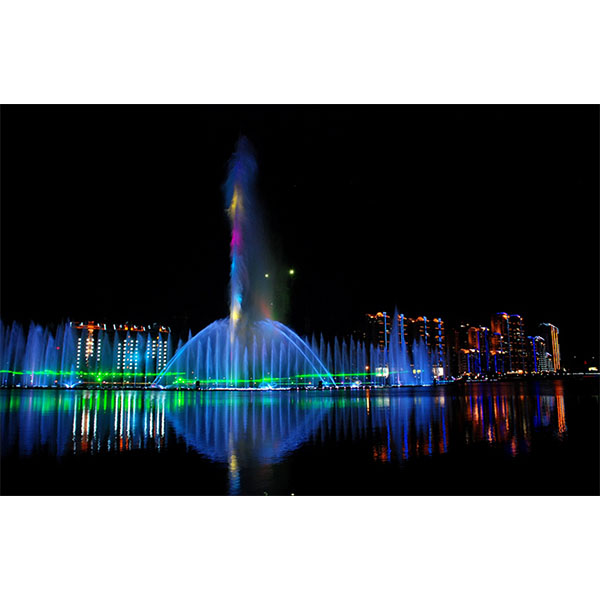
A floating musical fountain is a dynamic water feature installed on lakes, reservoirs, or oceans, combining synchronized water jets, colorful lighting, and music into a unified performance. Unlike traditional fixed fountains, these systems float on modular platforms, allowing for flexible deployment in deep water without civil engineering construction. This guide explores the working principles, design considerations, and technological advancements defining floating musical fountains in 2026.
What Is a Floating Musical Fountain?
A floating musical fountain represents the evolution of aquatic entertainment, moving away from concrete basins to adaptable, buoyant structures. These systems utilize high-density polyethylene (HDPE) or stainless steel pontoons to support pumps, nozzles, underwater lights, and control cabinets directly on the water surface.
The core distinction lies in their mobility and installation speed. While conventional fountains require draining water bodies and extensive excavation, a floating system can be assembled on land and towed into position. In 2026, industry standards emphasize modularity, enabling operators to expand show capabilities by adding more platform units as needed.
These installations are not merely decorative; they are complex electromechanical systems. They integrate variable frequency drives (VFDs) for precise water height control and DMX512 protocols for lighting synchronization. The result is an immersive sensory experience that transforms static water bodies into vibrant cultural landmarks.
Key Components of the System
Understanding the anatomy of a floating musical fountain is crucial for designers and stakeholders. The system comprises several interdependent subsystems that must operate in perfect harmony.
- Floating Platform: The foundation, typically made of corrosion-resistant materials, designed to withstand wave action and support heavy equipment loads.
- Hydraulic System: Includes submersible pumps, piping networks, and specialized nozzles that create various water shapes like arches, mist, and geysers.
- Lighting Array: High-power LED fixtures with IP68 ratings, capable of producing millions of color combinations and strobe effects.
- Control Center: The brain of the operation, housing industrial PLCs, audio processors, and wireless communication modules.
- Power Supply: Often involves underwater cabling connected to shore-based transformers or onboard generators for remote locations.
Each component must be selected based on the specific environmental conditions of the installation site. For instance, coastal projects require marine-grade stainless steel to resist saltwater corrosion, while inland lake projects may prioritize UV resistance for plastic components.
How Does a Floating Musical Fountain Work?
The operational logic of a floating musical fountain relies on real-time synchronization between audio signals and mechanical actuators. When a show begins, the central controller decodes the music track, analyzing beat, tempo, and frequency spectrum.
This data is then translated into command signals sent to the pump inverters and lighting dimmers. If the music reaches a crescendo, the system instructs the main pumps to increase pressure instantly, shooting water columns higher. Simultaneously, the lights shift to intense colors to match the emotional tone of the song.
Modern systems in 2026 utilize advanced algorithms to minimize latency. The delay between a drumbeat and the corresponding water jet movement is reduced to milliseconds, ensuring a seamless visual-audio connection. This precision is achieved through high-speed industrial networks rather than simple analog wiring.
The Role of Control Software
The software interface is where the artistic vision becomes reality. Designers use specialized programming tools to map every second of a music track to specific fountain behaviors.
- Timeline Editing: Users can drag and drop water effects onto a timeline aligned with the audio waveform.
- 3D Simulation: Before installation, the entire show can be previewed in a virtual environment to check for collisions or aesthetic issues.
- Automated Modes: Systems can run pre-programmed shows, random generative modes, or live manual control via a mixing console.
Reliability is paramount. Professional-grade software includes redundancy features, such as automatic failover to a backup controller if the primary unit loses signal. This ensures that performances continue smoothly even during minor technical glitches.
Floating vs. Fixed Musical Fountains: A Comparative Analysis
Choosing between a floating and a fixed installation is a critical decision in project planning. Each approach offers distinct advantages depending on the water body’s depth, bottom composition, and budget constraints.
| Feature | Floating Musical Fountain | Fixed (Submerged) Fountain |
|---|---|---|
| Installation Time | Fast; assembled on shore and towed | Slow; requires diving, draining, or cofferdams |
| Maintenance Access | Easy; platforms can be pulled to shore | Difficult; often requires divers or draining |
| Depth Flexibility | Unlimited; works in very deep water | Limited by pipe length and structural stability |
| Bottom Impact | None; non-invasive to the ecosystem | High; requires anchoring and trenching |
| Initial Cost | Moderate; savings on civil works | High; significant civil engineering costs |
| Stability | Dependent on anchoring and wave conditions | Extremely stable; fixed to the basin floor |
The table above highlights why floating musical fountains are becoming the preferred choice for natural lakes and reservoirs. The ability to avoid disturbing the lake bed preserves the local ecology, a growing concern for environmental regulators.
However, fixed fountains still hold an advantage in man-made pools where stability is the absolute priority. In areas prone to severe storms or hurricanes, a submerged system is less likely to drift or sustain damage from floating debris.
Design Considerations for 2026 Projects
Designing a world-class floating musical fountain requires a multidisciplinary approach involving hydraulic engineering, electrical safety, and artistic direction. The trends in 2026 focus on sustainability, energy efficiency, and smart integration.
Structural Stability and Anchoring
The most critical engineering challenge is keeping the platform stationary against wind, currents, and the reactive force of high-pressure water jets. An improperly anchored system can rotate or drift, ruining the viewing angle for the audience.
Current mainstream solutions utilize a multi-point mooring system. Heavy-duty chains or synthetic ropes connect the floating platform to deadweights or pile anchors on the lake bed. The tension in these lines must be calculated precisely to allow for water level fluctuations while maintaining position.
- Wind Load Calculation: Engineers must account for local maximum wind speeds to prevent capsizing.
- Wave Dampening: Platforms often include anti-sway baffles to reduce oscillation caused by boat wakes or natural waves.
- Modular Connection: Flexible couplings between platform sections allow the structure to flex with the water surface without breaking rigid pipes.
Energy Efficiency and Sustainability
As global energy costs rise, the operational expense of running high-power pumps and LEDs has become a major factor. Modern designs increasingly incorporate Variable Frequency Drives (VFDs) which adjust motor speed to match the exact flow requirement, reducing energy consumption by up to 40% compared to traditional throttling methods.
Furthermore, the integration of renewable energy sources is gaining traction. Some innovative projects now pair floating fountains with adjacent solar panel arrays on the same platform or nearby shores. While the fountain itself requires grid stability for show precision, solar power can offset baseline lighting or filtration loads during non-show hours.
Water conservation is another key aspect. Closed-loop circulation systems ensure that no water is wasted, with filtration units continuously cleaning the lake water before it passes through the nozzles. This prevents clogging and protects the aquatic environment from chemical treatments.
Safety and Electrical Standards
Safety is non-negotiable when combining electricity and water. All electrical components in a floating musical fountain must adhere to strict international standards, such as IEC or NEC codes regarding underwater equipment.
Ground Fault Circuit Interrupters (GFCIs) are mandatory to cut power instantly in case of a leak. Additionally, all underwater cables must be double-insulated and armored to resist abrasion from anchors or marine life. Regular insulation resistance testing is part of the standard maintenance protocol to ensure long-term safety for swimmers and boats near the installation.
Step-by-Step Installation Guide
Implementing a floating musical fountain follows a logical sequence that minimizes risk and ensures quality. While specific details vary by site, the general workflow remains consistent across professional projects.
- Site Survey and Analysis: Measure water depth, map the bottom topography, assess wind patterns, and determine the optimal viewing location for the audience.
- System Design and Simulation: Create hydraulic calculations, select nozzle types, design the platform layout, and program the initial show sequences in 3D software.
- Platform Assembly: Construct the floating modules on land or a dock. Install pumps, pipes, and lights onto the framework before launching.
- Towing and Positioning: Carefully tow the assembled platform to the designated coordinates. Secure the temporary holding lines.
- Anchoring Installation: Deploy the permanent mooring system. Divers or specialized vessels place anchors and connect the mooring lines to the platform.
- Cable Pulling and Connection: Lay underwater power and data cables from the shore to the platform. Make watertight connections in the control cabinets.
- Commissioning and Testing: Power up the system, test individual circuits, calibrate pump pressures, and run full dress rehearsals of the show.
- Handover and Training: Provide operation manuals and train local staff on daily startup, shutdown, and emergency procedures.
This structured approach ensures that potential issues are identified early. For example, testing the platform stability before connecting expensive electronics prevents water damage due to unexpected tipping during the towing phase.
Common Applications and Scenarios
The versatility of the floating musical fountain allows it to thrive in diverse environments. From small urban parks to massive resort destinations, the application scenarios dictate the scale and complexity of the system.
Urban Public Parks
City planners often use these fountains to revitalize underused lakes. They serve as evening attractions that draw families and tourists, boosting local commerce. In these settings, the focus is often on reliability and low noise operation to avoid disturbing nearby residents.
Resort and Hotel Landscapes
Luxury resorts utilize custom-designed shows to enhance guest experiences. Here, the aesthetic quality is paramount. Designs often include fire effects, laser projections, and intricate choreography set to popular music genres. The exclusivity of the show adds value to the property.
Large Scale Events and Festivals
Temporary floating fountains are increasingly used for festivals. Their modular nature allows them to be installed quickly for a weekend event and removed afterward without leaving a trace. This flexibility makes them ideal for seasonal celebrations or one-off cultural gatherings.
Maintenance and Operational Best Practices
To ensure longevity and consistent performance, a rigorous maintenance schedule is essential. Neglecting routine checks can lead to costly repairs and show interruptions.
- Daily Checks: Inspect water levels, verify cable integrity, and listen for unusual pump noises.
- Weekly Cleaning: Clean nozzles to remove algae or mineral buildup that affects spray patterns. Wipe down light lenses to maintain brightness.
- Monthly Inspection: Check mooring line tension and inspect underwater cables for signs of wear or marine growth.
- Seasonal Overhaul: Before winter or storm seasons, secure the platform firmly or partially disassemble sensitive components if extreme weather is expected.
Preventive maintenance is far more cost-effective than reactive repairs. Keeping a stock of spare nozzles, seals, and fuses on-site ensures that minor issues can be resolved immediately without delaying scheduled performances.
Frequently Asked Questions (FAQ)
Can a floating musical fountain operate in rough weather?
While designed to be robust, most systems have operational limits. Moderate wind and rain usually do not affect performance. However, during storms or high waves, it is standard procedure to shut down the system and secure the platform to prevent structural stress or electrical hazards.
How deep does the water need to be?
One of the primary benefits of a floating musical fountain is its independence from water depth. It can operate in waters ranging from 2 meters to over 50 meters deep, as the equipment sits on the surface rather than relying on the bottom for support.
Is the electricity safe for swimmers?
Safety is engineered into every layer. Systems use low-voltage lighting where possible, isolated transformers, and ground fault protection. Furthermore, safety zones are typically established around the fountain where swimming is prohibited during operation to prevent accidental contact with high-pressure jets.
How loud is the music?
Audio levels are adjustable and depend on the speaker configuration. Professional installations direct sound towards the audience area to minimize noise pollution in surrounding neighborhoods. Directional speakers and careful acoustic modeling help contain the sound within the desired zone.
What is the lifespan of a floating fountain system?
With proper maintenance and high-quality materials, the structural platform can last 15 to 20 years. Mechanical components like pumps and lights may require replacement every 5 to 8 years depending on usage intensity and environmental conditions.
Future Trends in Floating Fountain Technology
Looking beyond 2026, the industry is moving towards greater intelligence and interactivity. We anticipate the wider adoption of AI-driven show generation, where the fountain reacts in real-time to live music performances or crowd noise levels.
Drone integration is another emerging frontier. Imagine a show where hundreds of drones dance in the sky above the water jets, synchronized perfectly with the music and lights below. This multi-dimensional approach creates a spectacle that transcends traditional boundaries.
Additionally, advancements in battery technology may allow for completely autonomous floating fountains that store enough energy to run prime-time shows without continuous shore power, opening up possibilities for remote natural reserves.
Conclusion and Selection Advice
A floating musical fountain is more than just a water feature; it is a sophisticated blend of engineering and art that brings life to water bodies. Its advantages in installation speed, environmental friendliness, and maintenance accessibility make it a superior choice for many modern projects compared to traditional fixed systems.
This solution is ideally suited for:
- Developers looking to add value to waterfront properties without extensive construction.
- Municipalities aiming to revitalize public spaces with engaging night-time attractions.
- Event Organizers needing flexible, high-impact entertainment solutions.
When considering a project, prioritizing partners who offer comprehensive services from design to after-sales support is crucial. Ensuring they utilize proven technologies and adhere to strict safety standards will guarantee success. By choosing the right configuration and maintaining it diligently, a floating musical fountain can serve as an iconic landmark for decades.
For those ready to transform a static lake into a dynamic stage, the next step is to conduct a detailed site assessment and consult with experienced engineers. Industry leaders like Shenyang Feiya Water Art Garden Engineering Co., Ltd. exemplify the level of expertise required for such complex undertakings. Since 2006, Feiya has successfully delivered over 100 large and medium-sized fountain projects globally, accumulating rich experience in both design and construction. With a dedicated team of more than 80 technicians—including 15 senior engineers and water jet experts—the company integrates advanced hydraulic engineering with ecological landscape planning. Their holistic approach, which combines garden construction with environmental science, ensures that every project not only delivers a spectacular visual performance but also contributes to a quality humanistic ecological environment. Whether for urban revitalization or resort enhancement, partnering with an established entity like Feiya ensures that your vision is realized with precision, reliability, and artistic excellence.