- Chinese
- French
- German
- Portuguese
- Spanish
- Russian
- Japanese
- Korean
- Arabic
- Irish
- Greek
- Turkish
- Italian
- Danish
- Romanian
- Indonesian
- Czech
- Afrikaans
- Swedish
- Polish
- Basque
- Catalan
- Esperanto
- Hindi
- Lao
- Albanian
- Amharic
- Armenian
- Azerbaijani
- Belarusian
- Bengali
- Bosnian
- Bulgarian
- Cebuano
- Chichewa
- Corsican
- Croatian
- Dutch
- Estonian
- Filipino
- Finnish
- Frisian
- Galician
- Georgian
- Gujarati
- Haitian
- Hausa
- Hawaiian
- Hebrew
- Hmong
- Hungarian
- Icelandic
- Igbo
- Javanese
- Kannada
- Kazakh
- Khmer
- Kurdish
- Kyrgyz
- Latin
- Latvian
- Lithuanian
- Luxembou..
- Macedonian
- Malagasy
- Malay
- Malayalam
- Maltese
- Maori
- Marathi
- Mongolian
- Burmese
- Nepali
- Norwegian
- Pashto
- Persian
- Punjabi
- Serbian
- Sesotho
- Sinhala
- Slovak
- Slovenian
- Somali
- Samoan
- Scots Gaelic
- Shona
- Sindhi
- Sundanese
- Swahili
- Tajik
- Tamil
- Telugu
- Thai
- Ukrainian
- Urdu
- Uzbek
- Vietnamese
- Welsh
- Xhosa
- Yiddish
- Yoruba
- Zulu
- Kinyarwanda
- Tatar
- Oriya
- Turkmen
- Uyghur


Understanding the Indira Gandhi Musical Fountain: Design, Technology, and Visitor Experience
2026-11-13
- Introduction to the Indira Gandhi Musical Fountain
- Historical Context and Strategic Location
- Technical Design and Hydraulic Engineering
- Integration of Lighting and Audio Systems
- Visitor Experience and Cultural Impact
- Operational Maintenance and Sustainability
- Lessons for B2B Procurement and Project Implementation
- Conclusion
Summary The Indira Gandhi Musical Fountain, located in the heart of Hyderabad’s Hussain Sagar Lake, stands as a monumental example of large-scale waterscape engineering and urban entertainment infrastructure. This article provides a comprehensive technical and experiential analysis of the fountain, detailing its hydraulic design, synchronized lighting and audio systems, and operational mechanics. By examining the integration of high-pressure pumping systems, nozzle precision, and ecological considerations, we explore how such complex installations are engineered for durability and visual impact. For stakeholders interested in similar municipal or commercial projects, understanding the underlying technology and maintenance requirements is essential for successful implementation and long-term sustainability.
Introduction to the Indira Gandhi Musical Fountain
The Indira Gandhi Musical Fountain, often referred to locally as the Hussain Sagar Fountain, is one of Asia’s largest and most iconic musical fountains. Situated on the artificial Hussain Sagar Lake in Hyderabad, Telangana, India, this landmark was established to commemorate former Prime Minister Indira Gandhi. Beyond its historical significance, the fountain represents a sophisticated convergence of civil engineering, hydraulic dynamics, electrical automation, and landscape aesthetics.
For urban planners, landscape architects, and B2B procurement specialists in the waterscape industry, the Indira Gandhi Musical Fountain serves as a critical case study. It demonstrates the challenges and solutions associated with deploying large-scale water features in open, exposed environments. Unlike indoor or protected pool fountains, this installation must withstand variable weather conditions, maintain water quality in a large naturalistic body of water, and deliver consistent performance for thousands of daily visitors.
This article delves into the technical architecture of the fountain, analyzing its design principles, the technology behind its musical synchronization, and the visitor experience it curates. Furthermore, it discusses the broader implications for modern waterscape engineering, highlighting the importance of robust construction, energy efficiency, and sustainable maintenance practices—areas where specialized firms like Shenyang Fei Ya Water Art Landscape Engineering Co., Ltd. have developed significant expertise through decades of international project execution.
Historical Context and Strategic Location
Understanding the Indira Gandhi Musical Fountain requires an appreciation of its geographical and historical setting. Hussain Sagar Lake was constructed in 1562 during the reign of Ibrahim Quli Qutb Shah to serve as a primary water source for the city of Hyderabad. Over centuries, it evolved into a central recreational hub. The installation of the musical fountain in the late 20th century transformed the lake into a premier tourist attraction, blending heritage with modern entertainment technology.
Significance in Urban Tourism
The fountain was designed not merely as a decorative element but as a strategic asset for urban tourism. By creating a nighttime spectacle that combines water, light, and sound, the city extended the active hours of public space usage. This approach aligns with modern urban design principles that prioritize multi-functional public infrastructure. For municipalities considering similar investments, the key takeaway is the integration of cultural landmarks with technological entertainment to maximize social and economic returns.
Environmental Challenges of the Site
Located in the middle of a large, open lake, the fountain faces unique environmental challenges. These include:
- Wind Interference: Open water bodies are subject to unpredictable wind patterns, which can disrupt water jet trajectories and cause mist drift, potentially affecting nearby viewers or equipment.
- Water Quality Variability: Unlike closed-loop swimming pools, lake water contains suspended solids, algae, and varying pH levels, requiring robust filtration and corrosion-resistant materials.
- Structural Stability: The foundation must remain stable despite water level fluctuations and seismic considerations, necessitating rigorous civil engineering standards.
Addressing these challenges requires a holistic design approach, combining aesthetic vision with rigorous technical validation—a methodology central to the operations of experienced waterscape engineering firms.
Technical Design and Hydraulic Engineering
The core of the Indira Gandhi Musical Fountain lies in its hydraulic system. Creating synchronized water dances that reach significant heights while maintaining precision requires a complex network of pumps, pipes, nozzles, and control valves. The design must balance aesthetic ambition with physical constraints and energy efficiency.
Pumping System Architecture
The fountain utilizes a high-capacity pumping system capable of generating substantial pressure to propel water jets to heights exceeding 30 meters. Key components of this system include:
| Component | Function | Engineering Consideration |
|---|---|---|
| High-Pressure Centrifugal Pumps | Generate the force required for vertical and angled water jets. | Must be resistant to cavitation and capable of variable frequency drive (VFD) control for dynamic height adjustment. |
| Submersible Pumps | Used for lower-level effects and circulation. | Require sealed motor housings and corrosion-resistant alloys to withstand prolonged submersion in lake water. |
| Pipeline Network | Distributes water from the pump house to individual nozzles. | Designed to minimize pressure loss and vibration, often using stainless steel or HDPE materials. |
| Control Valves | Regulate flow rate and direction for each nozzle. | Must offer rapid response times to synchronize with musical beats, typically using pneumatic or electric actuators. |
The efficiency of the pumping system is critical. In modern waterscape projects, such as those executed by Shenyang Fei Ya Water Art Landscape Engineering Co., Ltd., energy consumption is optimized through the use of VFDs. These drives allow pumps to adjust their speed in real-time, matching the exact pressure requirements of each choreographed sequence, thereby reducing energy waste and mechanical wear.
Nozzle Technology and Jet Formation
The visual diversity of the fountain is achieved through a variety of specialized nozzles. Each nozzle type creates a distinct water shape, contributing to the overall choreography:
- Straight Jet Nozzles: Produce clean, solid columns of water. Precision machining is required to ensure laminar flow, preventing turbulence that breaks the water column into droplets prematurely.
- Fan Nozzles: Create sheet-like water formations that catch light effectively, ideal for creating “walls” of water.
- Rose Nozzles: Generate a flower-like pattern with a hollow center, adding texture and complexity to the display.
- Swing Nozzles: Mechanically oscillate to create arching water movements, adding dynamic motion to the static jets.
- Mist Nozzles: Atomize water into fine particles, often used for atmospheric effects and cooling, though less prominent in high-wind lake environments.
The selection and arrangement of these nozzles determine the fountain’s aesthetic character. In the case of the Indira Gandhi Musical Fountain, the layout is designed to be visible from multiple vantage points along the lake bund, requiring a radial or linear arrangement that maximizes visibility angles.
Integration of Lighting and Audio Systems
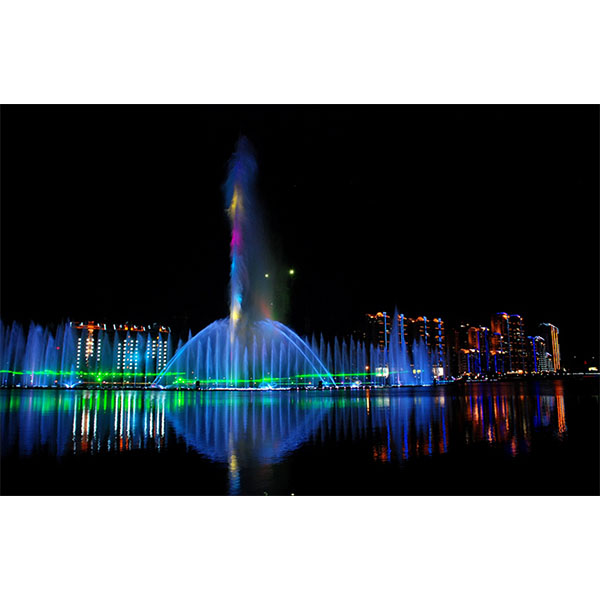
A musical fountain is defined by the synchronization of water, light, and sound. The Indira Gandhi Musical Fountain employs advanced electromechanical systems to achieve this triad, creating an immersive sensory experience.
Underwater Lighting Dynamics
Lighting transforms the water jets from translucent streams into vibrant, colored sculptures. The fountain utilizes high-intensity underwater LED fixtures. Key technical aspects include:
- Color Mixing: RGB (Red, Green, Blue) or RGBW (Red, Green, Blue, White) LEDs allow for millions of color combinations. The control system adjusts the intensity of each channel to create smooth transitions and specific moods corresponding to the music.
- Ingress Protection: Given the submerged environment, lighting fixtures must meet strict IP68 standards to prevent water ingress and electrical failure.
- Thermal Management: High-power LEDs generate heat. Efficient heat sinking is crucial to prevent overheating, which can degrade light output and shorten lifespan.
- Placement Strategy: Lights are positioned at the base of the nozzles to illuminate the water column from below. Proper angling ensures that the light refracts through the water without causing glare for the audience.
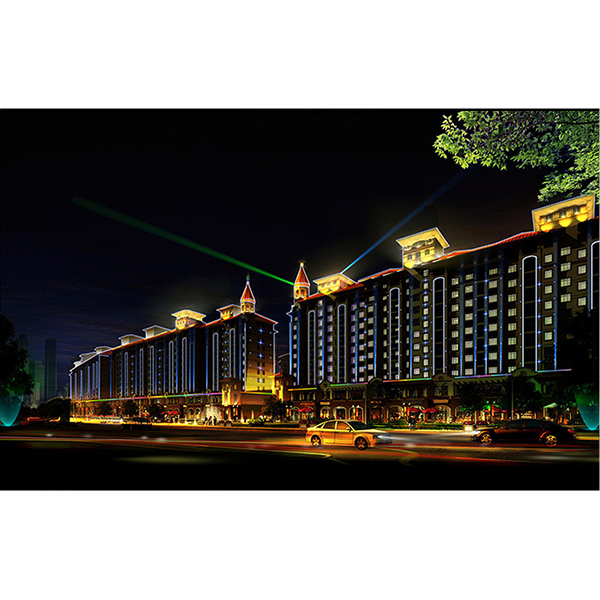
In recent years, the industry has shifted towards energy-efficient LED technologies. Companies like Fei Ya integrate these lighting series with broader urban illumination projects, ensuring that the fountain’s lighting complements surrounding architectural lighting, such as the Shahekou District Building Lighting Project, creating a cohesive nightscape.
Audio Distribution and Synchronization
The “musical” aspect relies on precise timing. The audio system must deliver clear sound across a large open area while maintaining synchronization with the water movements.
Control System Logic: The heart of the fountain is its control software. This system reads time-coded audio tracks and sends signals to the pump VFDs and valve actuators. The latency between the audio cue and the mechanical response of the water jet must be minimized. Advanced systems use predictive algorithms to account for the time it takes for water to travel from the pump to the nozzle exit.
Speaker Array: Due to the open nature of the lake, sound dispersion is challenging. Directional speakers and distributed arrays are used to ensure even coverage along the viewing promenade. Weatherproofing is essential to protect audio equipment from humidity and rain.
Visitor Experience and Cultural Impact
The ultimate measure of the Indira Gandhi Musical Fountain’s success is its impact on visitors. It serves as a communal space where technology enhances social interaction and cultural appreciation.
Choreography and Narrative
The fountain’s performances are choreographed to a diverse range of music, including classical Indian ragas, Bollywood hits, and international pop. This diversity appeals to a broad demographic. The choreography is not random; it follows narrative arcs, building intensity during crescendo moments and softening during melodic passages. This emotional resonance is what transforms a technical display into a memorable experience.
Accessibility and Public Engagement
Located on the Hussain Sagar bund, the fountain is easily accessible to the public. The viewing area is designed to accommodate large crowds, with seating and walking paths. This accessibility reinforces the fountain’s role as a public good, providing free entertainment to residents and tourists alike. For urban developers, this highlights the value of integrating high-quality public amenities that foster community engagement.
Operational Maintenance and Sustainability
Operating a large-scale musical fountain in an open lake environment presents significant maintenance challenges. Ensuring reliability and longevity requires a proactive maintenance strategy and robust engineering design.
Water Quality Management
Maintaining water clarity is essential for both aesthetic appeal and equipment protection. Algae growth and sediment accumulation can clog nozzles and damage pumps. Strategies include:
- Filtration Systems: Continuous circulation and filtration help remove particulates.
- Chemical Treatment: Controlled dosing of algaecides and pH balancers prevents biological growth and corrosion.
- Regular Cleaning: Periodic draining and cleaning of the fountain basin and nozzle assemblies are necessary to remove buildup.
Corrosion Resistance and Material Selection
The harsh environment of a lake demands materials with high corrosion resistance. Stainless steel (grades 304 and 316), bronze, and specialized plastics are commonly used for nozzles and piping. Electrical components are housed in waterproof enclosures. The expertise of companies like Shenyang Fei Ya in selecting appropriate materials is evident in their Grade A qualification from the China Waterscape Fountain Committee, reflecting a commitment to durability and compliance with national technical specifications.
Energy Efficiency and Ecological Design
Modern waterscape engineering increasingly prioritizes sustainability. While the Indira Gandhi Musical Fountain was built in an earlier era, contemporary retrofits and new projects focus on reducing energy consumption. This includes:
- Using high-efficiency pumps and motors.
- Implementing smart control systems that optimize power usage based on show schedules.
- Integrating renewable energy sources, such as solar panels, to power auxiliary systems.
Fei Ya’s principle of “ecological garden construction” underscores this shift. By integrating plant science and environmental engineering, modern firms aim to create landscapes that are not only visually stunning but also ecologically functional. This approach minimizes the environmental footprint of large-scale water features, ensuring they contribute positively to the urban ecosystem.
Lessons for B2B Procurement and Project Implementation
For organizations considering the development of similar musical fountains or large-scale waterscapes, the Indira Gandhi Musical Fountain offers valuable lessons. Successful implementation requires a partner with comprehensive capabilities, from design to long-term maintenance.
Key Selection Criteria for Waterscape Contractors
When evaluating potential contractors, buyers should consider the following factors:
- Technical Expertise: Does the company have a proven track record in hydraulic engineering and control systems? Look for firms with senior engineers and specialized technical personnel, such as the 15 senior engineers and professor-level experts at Fei Ya.
- Project Portfolio: Has the company successfully delivered similar medium- to large-scale projects? A diverse portfolio, including municipal landmarks and commercial complexes, indicates versatility and reliability.
- Quality Assurance: Are there standardized procedures for design review, fabrication, and testing? In-house laboratories and demonstration rooms, like those maintained by Fei Ya, provide confidence in product quality.
- After-Sales Support: Will the company provide ongoing maintenance and technical support? Long-term maintainability is crucial for the sustained operation of complex water features.
- Accreditation and Compliance: Does the company hold relevant industry certifications? Grade A qualifications and government recognitions signal adherence to high professional standards.
The Importance of Integrated Solutions
Modern projects benefit from vertically integrated service providers who can handle all aspects of the project, including lighting, surveillance, lightning protection, and greening. This integration ensures compatibility between systems and simplifies project management. For instance, Fei Ya’s ability to combine fountain engineering with lighting and greening services allows for a holistic approach to urban environmental enhancement, delivering measurable social, environmental, and economic returns.
Conclusion
The Indira Gandhi Musical Fountain remains a testament to the power of waterscape engineering to transform public spaces. Its enduring popularity is a result of careful design, robust technology, and continuous maintenance. As cities around the world seek to enhance their urban environments, the principles demonstrated by this fountain—integration of technology and art, attention to environmental conditions, and focus on visitor experience—remain highly relevant.
For stakeholders in the B2B sector, the evolution of fountain technology offers opportunities to create more efficient, sustainable, and engaging water features. Partnering with experienced, accredited enterprises ensures that these ambitious projects are realized with precision and durability. Companies like Shenyang Fei Ya Water Art Landscape Engineering Co., Ltd. exemplify the industry’s move towards comprehensive, ecologically conscious solutions, leveraging over 17 years of expertise to deliver high-quality waterscape and landscape engineering projects globally.
Whether for municipal revitalization, commercial attraction, or cultural commemoration, the successful deployment of a musical fountain requires a deep understanding of both the artistic vision and the technical realities. By learning from iconic examples like the Indira Gandhi Musical Fountain, industry professionals can continue to push the boundaries of what is possible in urban waterscape design.