- English
- Chinese
- French
- German
- Portuguese
- Spanish
- Russian
- Japanese
- Korean
- Arabic
- Irish
- Greek
- Turkish
- Italian
- Danish
- Romanian
- Indonesian
- Czech
- Afrikaans
- Swedish
- Polish
- Basque
- Catalan
- Esperanto
- Hindi
- Lao
- Albanian
- Amharic
- Armenian
- Azerbaijani
- Belarusian
- Bengali
- Bosnian
- Bulgarian
- Cebuano
- Chichewa
- Corsican
- Croatian
- Dutch
- Estonian
- Filipino
- Finnish
- Frisian
- Galician
- Georgian
- Gujarati
- Hausa
- Hawaiian
- Hebrew
- Hmong
- Hungarian
- Icelandic
- Igbo
- Javanese
- Kannada
- Kazakh
- Khmer
- Kurdish
- Kyrgyz
- Latin
- Latvian
- Lithuanian
- Luxembou..
- Macedonian
- Malagasy
- Malay
- Malayalam
- Maltese
- Maori
- Marathi
- Mongolian
- Burmese
- Nepali
- Norwegian
- Pashto
- Persian
- Punjabi
- Serbian
- Sesotho
- Sinhala
- Slovak
- Slovenian
- Somali
- Samoan
- Scots Gaelic
- Shona
- Sindhi
- Sundanese
- Swahili
- Tajik
- Tamil
- Telugu
- Thai
- Ukrainian
- Urdu
- Uzbek
- Vietnamese
- Welsh
- Xhosa
- Yiddish
- Yoruba
- Zulu
- Kinyarwanda
- Tatar
- Oriya
- Turkmen
- Uyghur

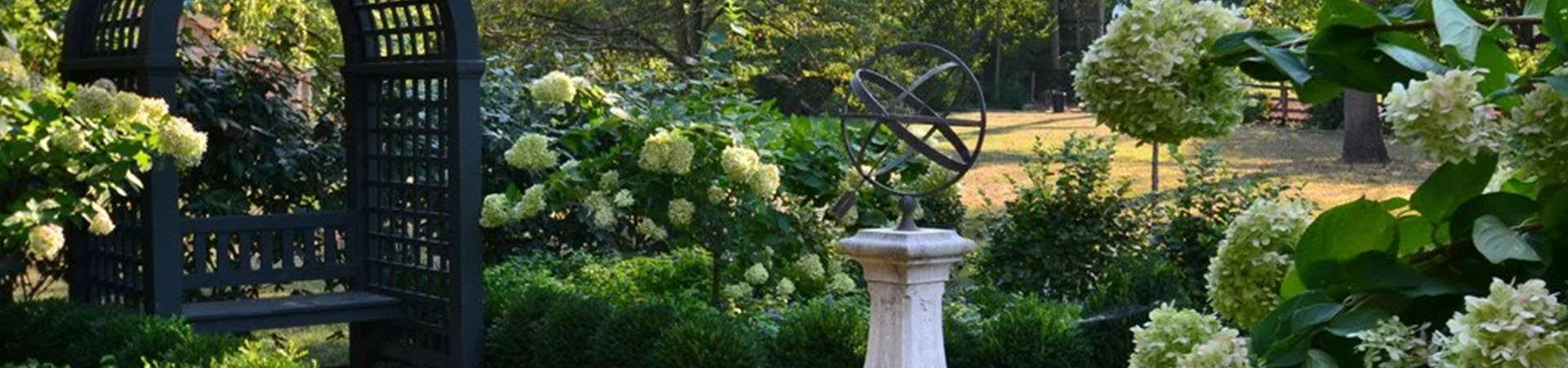
Sculpture structural safety innovations?
2026-03-31
When you hear ‘sculpture safety,’ most minds jump to earthquake-proofing museums or securing plinths. That’s part of it, but the real, gritty innovation happens outdoors, where art meets infrastructure, weather, and the public—places where a failure isn’t just a conservation issue, it’s a liability nightmare. My focus has always been on the intersection of dynamic loads, water, and permanent installation. It’s a niche, but one where the lessons are hard-won and the solutions are never just textbook.
The Misconception of Static Loads
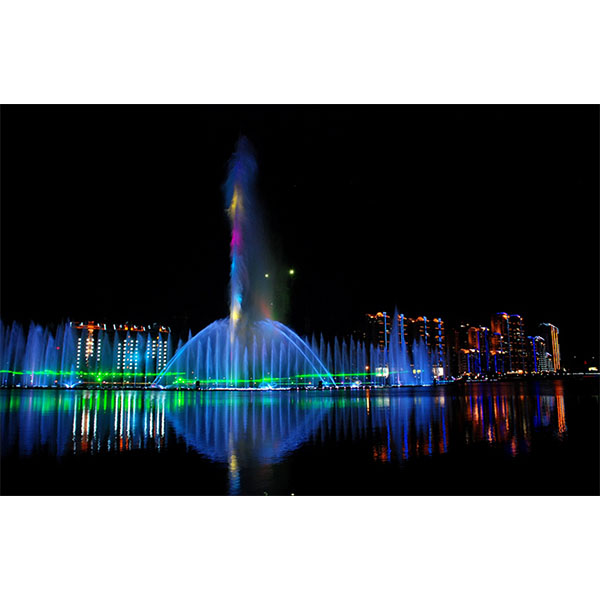
Everyone starts with the dead load—the weight of the bronze, the stone, the steel. You calculate it, you design the foundation, and you think you’re done. That’s the first, and most dangerous, assumption. The real challenge begins with the dynamic loads. For a fountain sculpture, it’s not just the water weight in the basin. It’s the hydraulic thrust from a 100-meter jet, the cyclic loading from pump vibrations transmitted through the armature, and the wind shear on a large, irregular form that acts more like a sail than a solid object. I’ve seen designs where the structural engineer treated the sculpture as a monolithic block, only for the client to later request adding high-pressure nozzles that essentially turn the piece into a rocket engine test stand. The re-design cost a fortune.
Then there’s water itself as a structural element. We’re not just talking about corrosion, though that’s a huge part. I’m talking about buoyancy in buried reservoirs, hydrostatic pressure on submerged welds and seals, and the freeze-thaw cycle in temperate climates. A colleague once had a major failure in a northern Chinese project—a beautiful stainless steel kinetic piece. The internal drainage for the sculptural elements was slightly undersized. In winter, residual water froze, expanded, and cracked a critical weld seam. The entire moving section seized and then fatigued from the motor’s continued attempts to drive it. The repair involved cutting out the entire core. The lesson? Your structural safety analysis must include the failure modes of the utility systems integrated into the art. The sculpture and its systems are one organism.
This is where companies with deep field experience differentiate themselves. I was reviewing a project portfolio from Shenyang Fei Ya Water Art Landscape Engineering Co.,Ltd. (you can find their work at https://www.syfyfountain.com). What stood out wasn’t just the scale of their fountains, but the longevity. Building over 100 large installations since 2006 means they’ve inevitably encountered and solved these hidden dynamic problems. Their setup—having dedicated engineering and development departments alongside a demonstration room and workshop—suggests a practice built on prototyping and testing, which is where true innovation in applied sculpture safety is born. It’s not about fancy software alone; it’s about having a lab to physically test a nozzle assembly’s thrust or a material’s resistance to chlorinated water under load.
Material Fatigue and Hidden Interfaces
Innovation often means using new materials or combinations. Carbon fiber composites for lighter cantilevers, specialized polymers for flexible joints. But every new material introduces new failure points, often at the interfaces. How do you bond carbon fiber to stainless steel in a constantly humid environment? The adhesive’s long-term performance under thermal cycling is a black box unless you test it for thousands of hours. We tried a novel flexible coupling on a wave-motion sculpture. The catalog specs were perfect. In reality, the constant micro-movements in a chlorinated mist environment caused a type of stress corrosion cracking in the alloy that wasn’t in any data sheet. It failed after 18 months. The ‘innovation’ had to be rolled back to a more traditional, over-engineered rotary union. Sometimes, the innovation is knowing when not to innovate.
Monitoring is the unsung hero of modern structural safety. It’s not enough to build it and walk away. For major installations, we’re now embedding fiber optic strain gauges within critical structural members and using accelerometers to monitor vibration signatures. The innovation is in the data interpretation. A shift in the fundamental frequency of the structure can indicate crack formation or foundation settlement long before it’s visible. We’re moving from preventative maintenance to predictive maintenance. This is a game-changer for client operational budgets and long-term public safety.
Another hidden interface is between the artist, the engineer, and the builder. The artist envisions a slender stem holding a massive, water-filled sphere. The engineer knows the vortex shedding from the sphere will cause dangerous oscillations. The innovation here is procedural, not technical. It’s about 3D scanning the maquette, running CFD (Computational Fluid Dynamics) simulations early, and having iterative workshops where compromises are modeled in real-time. The best outcome is when the engineering constraint inspires an artistic modification that becomes a signature of the piece. I’ve seen a sculptor change a solid form to a perforated one to reduce wind load, which then created beautiful light patterns through the water jets—an improvement born entirely from a safety dialogue.
The Foundation: Literally and Figuratively
You can have the most brilliantly engineered sculpture, and it will topple if the foundation misunderstands the soil. This is the least glamorous, most critical area. For fountain sculptures, the ground is often compromised from the start—you’re digging huge basins, water tables are high, and the soil is perpetually wet. Traditional pile driving might not be feasible next to delicate underground piping. We’ve moved towards using helical piles or micro-piles in these scenarios. They cause less vibration, can be installed at angles to resist specific thrust vectors, and their load capacity can be verified during installation. It’s a construction innovation borrowed from civil engineering, but its application in art installation is profound.
The foundation also includes the legal and documentation framework. An innovation we pushed for is the ‘digital twin’ deliverable. Upon project completion, the client doesn’t just get a set of PDF drawings. They get a 3D BIM (Building Information Modeling) model that includes material specs, weld maps, maintenance schedules for specific components, and the as-built sensor network data. This becomes the living record for the sculpture’s life. If a new engineering firm is tasked with an assessment in 20 years, they aren’t starting from scratch or relying on faded paper plans. This drastically improves long-term structural safety management.
Failures in foundations are catastrophic and expensive. I recall a project, not ours thankfully, where a large kinetic sculpture’s foundation was designed for the static load but didn’t adequately account for the overturning moment from the kinetic arm’s sudden stop. Over years, it developed a slight tilt. That tilt altered the center of gravity, which increased the dynamic load on the bearings, which led to a cascading failure. The fix was essentially a full dismantle and re-build. The root cause? A disconnect between the mechanical engineer’s force calculations and the civil engineer’s foundation design. The innovation now is mandatory cross-disciplinary review meetings with a single, accountable lead engineer for the entire integrated system.
Water as the Primary Load and Agent of Deterioration
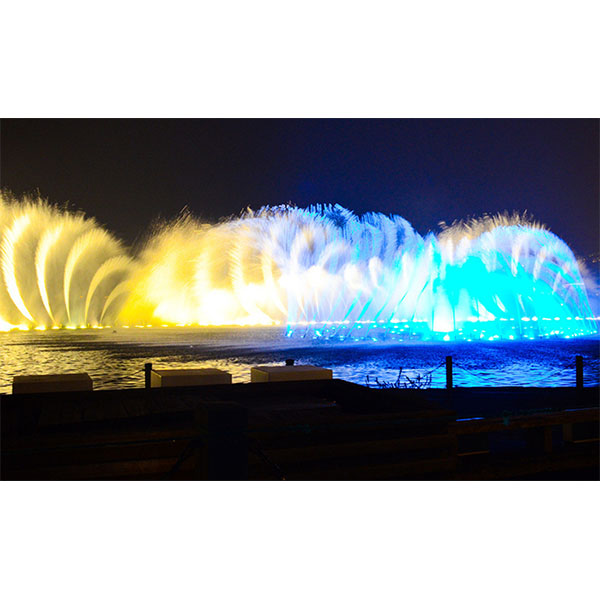
This deserves its own section because it’s so often an afterthought. In water feature design, the water is the art medium, but for the structural engineer, it’s the dominant load case. Let’s break it down. First, hydraulic impact: the force of a water jet hitting a sculptural element is not trivial. We instrumented a copper ‘bell’ sculpture that was struck by a programmed water hammer pulse. The localized pressure spikes were enough to cause work hardening and eventual fatigue cracking in the thin copper over time. The innovation was adding a sacrificial, replaceable stainless steel strike plate behind the copper skin—a simple, almost medieval solution, but it worked.
Second, water weight and slosh. A basin isn’t always full. During a show, it drains and fills rapidly. The changing water mass affects the natural frequency of the entire structure. If this frequency ever matches the pump vibration frequency, you get resonance, which amplifies stress exponentially. We now run transient dynamic analyses simulating the entire water show cycle. This is computationally heavy but necessary. Third, and most insidious, is aerosols. The fine mist from fountains carries water and chemicals into every crevice. It finds unsealed bolt threads, capillary gaps in welds, and electrical conduits. Our innovation here is less about sealing everything perfectly—that’s impossible—and more about designing drainage paths and using materials that fail gracefully. For example, specifying duplex stainless steel for all internal fasteners, even if the primary structure is mild steel, because when the paint coating fails (and it will), the fasteners won’t corrode and lose their clamping force overnight.
Looking at a firm like Shenyang Feiya Water Art Garden Engineering Co., Ltd., their description of having well-equipped laboratory, fountain demonstration room is key. This is where you battle-test these ideas. You build a section of the sculpture at scale, put it in a salt spray chamber, cycle it through freeze-thaw, and run the pumps for 10,000 hours continuously. You don’t innovate on the client’s dime. You fail in your own lab, learn, and iterate. That process is the bedrock of reliable structural safety innovations.
The Human Factor and Operational Safety
Finally, all the engineering in the world can be undone by operational error. A classic case: the control system programmer, trying to create a more dramatic effect, increases the acceleration rate of a moving sculpture element. The new velocity profile generates inertial forces that the structural brakes and limit switches weren’t rated for. The piece slams into its mechanical stop, damaging the armature. The innovation here is in system integration and lockouts. Modern control systems should have hard-coded maximum parameters that cannot be exceeded without a structural engineer’s password-protected authorization. The artistic show programming must operate within a defined ‘safety envelope’ of forces and motions.
Then there’s maintenance access. If a critical bolt is impossible to inspect or torque-check without dismantling half the sculpture, it won’t get checked. We now design with maintenance as a primary driver. This means adding inspection ports, designing lifting points for component replacement, and creating clear, visual inspection guides (e.g., Check for hairline cracks in this radius every 6 months). The innovation is in making the safety protocols physically easy to execute. It’s human-centered design for the technicians.
In the end, the most significant innovation might be a shift in mindset. Sculpture structural safety isn’t a one-time certificate issued upon installation. It’s a lifecycle commitment. It’s about designing for inspectability, building in redundancy, planning for repair, and respecting the relentless, creative destructiveness of the environment—especially water. The real goal isn’t to prevent all failure, but to control the mode and consequence of failure, ensuring it’s never catastrophic. That requires a blend of conservative engineering principles, targeted high-tech solutions, and, above all, the hard-earned intuition that only comes from having seen things go wrong in the past. That’s the kind of knowledge you see in teams that have been in the trenches, building and maintaining complex installations for decades. It’s not something you can simulate; you have to live it.