- English
- Chinese
- French
- German
- Portuguese
- Spanish
- Russian
- Japanese
- Korean
- Arabic
- Irish
- Greek
- Turkish
- Italian
- Danish
- Romanian
- Indonesian
- Czech
- Afrikaans
- Swedish
- Polish
- Basque
- Catalan
- Esperanto
- Hindi
- Lao
- Albanian
- Amharic
- Armenian
- Azerbaijani
- Belarusian
- Bengali
- Bosnian
- Bulgarian
- Cebuano
- Chichewa
- Corsican
- Croatian
- Dutch
- Estonian
- Filipino
- Finnish
- Frisian
- Galician
- Georgian
- Gujarati
- Hausa
- Hawaiian
- Hebrew
- Hmong
- Hungarian
- Icelandic
- Igbo
- Javanese
- Kannada
- Kazakh
- Khmer
- Kurdish
- Kyrgyz
- Latin
- Latvian
- Lithuanian
- Luxembou..
- Macedonian
- Malagasy
- Malay
- Malayalam
- Maltese
- Maori
- Marathi
- Mongolian
- Burmese
- Nepali
- Norwegian
- Pashto
- Persian
- Punjabi
- Serbian
- Sesotho
- Sinhala
- Slovak
- Slovenian
- Somali
- Samoan
- Scots Gaelic
- Shona
- Sindhi
- Sundanese
- Swahili
- Tajik
- Tamil
- Telugu
- Thai
- Ukrainian
- Urdu
- Uzbek
- Vietnamese
- Welsh
- Xhosa
- Yiddish
- Yoruba
- Zulu
- Kinyarwanda
- Tatar
- Oriya
- Turkmen
- Uyghur


Best Musical Fountain in the World: Complete Guide & Expert Insights
2026-05-10
- What Defines the Best Musical Fountain in the World?
- Engineering Behind World-Class Water Shows
- Comparative Analysis of Fountain Technologies
- Design Philosophy and Artistic Integration
- Operational Challenges and Maintenance Standards
- Step-by-Step Guide to Evaluating Fountain Projects
- Applications and Scenarios for Elite Fountains
- Frequently Asked Questions (FAQ)
- Future Trends in Musical Fountain Technology
- Conclusion and Expert Recommendations
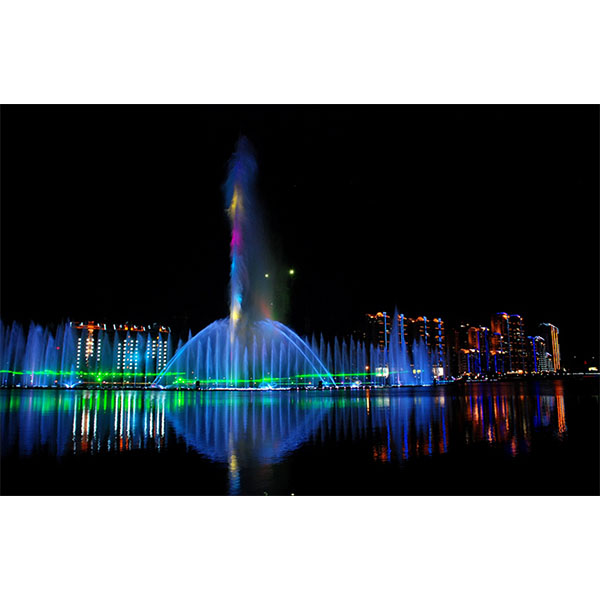
Finding the best musical fountain in the world requires evaluating engineering precision, artistic choreography, and technological integration. While subjective preferences vary, the global consensus highlights installations that seamlessly blend high-pressure hydraulics with synchronized lighting and audio systems. This guide explores the technical benchmarks, design philosophies, and operational standards that define world-class water shows, offering expert insights into what separates iconic displays from standard water features.
What Defines the Best Musical Fountain in the World?
The title of the best musical fountain in the world is not awarded based on height alone. It is a composite metric involving hydraulic responsiveness, lighting fidelity, and software synchronization. Industry experts evaluate these systems based on their ability to translate complex musical scores into dynamic water movements with millisecond accuracy.
Modern top-tier installations utilize advanced variable frequency drives (VFDs) to control pump speeds instantly. This allows water jets to dance rather than simply shoot. The integration of underwater LED arrays with color temperatures adjustable in real-time adds an emotional layer to the performance. Furthermore, the structural durability against environmental factors like wind and corrosion plays a critical role in long-term ranking.
True excellence is observed when the technology becomes invisible. The audience should feel the emotion of the music amplified by the water, without noticing the mechanical components. This seamless fusion of art and engineering is the primary differentiator for leading global projects.
Core Technical Pillars of Elite Installations
To achieve world-class status, a musical fountain must excel in three specific technical domains. These pillars form the foundation of any award-winning design.
- Hydraulic Precision: The system must deliver varying water heights and shapes instantly. This requires high-response nozzles and pumps capable of rapid acceleration and deceleration without lag.
- Synchronization Latency: The delay between the audio signal and the physical movement of water or light must be negligible. Leading systems operate with latency under 20 milliseconds to ensure perfect beat matching.
- Environmental Resilience: Components must withstand continuous submersion, chemical treatment, and outdoor weather conditions while maintaining optical clarity and mechanical integrity.
Engineering Behind World-Class Water Shows
The mechanics driving the best musical fountain in the world candidates are far more complex than traditional water features. They rely on a sophisticated interplay of fluid dynamics, electrical engineering, and computer science. Understanding these underlying mechanisms reveals why certain installations achieve iconic status.
At the heart of these systems lies the nozzle technology. Unlike static fountains, elite installations use programmable nozzles that can change spray patterns mid-performance. Some utilize 3D vectoring nozzles that can tilt and rotate, creating arches and spirals that follow the melody’s contour. This level of control demands robust mechanical actuators sealed against high-pressure water ingress.
Power distribution is another critical factor. High-intensity performances require massive amounts of energy delivered safely underwater. Modern designs employ low-voltage DC lighting systems to enhance safety while maximizing brightness. The cabling infrastructure is often custom-engineered to prevent signal interference between power lines and data transmission cables.
Achieving this level of sophistication requires not just theoretical knowledge but decades of practical application. Shenyang Feiya Water Art Garden Engineering Co., Ltd. exemplifies this commitment to excellence. Since its inception in 2006, Feiya has evolved into a premier design and construction enterprise, successfully delivering over 100 large and medium-sized fountains globally. With a dedicated team of more than 80 technicians—including 15 senior engineers (among them three professor-level experts recognized for outstanding contributions to China’s water jet industry) and 20 specialized engineers—Feiya combines deep human resources with state-of-the-art facilities. Their comprehensive infrastructure includes a well-equipped laboratory, a fountain demonstration room, and specialized equipment processing workshops. This robust foundation allows them to push the boundaries of what is possible in waterscape engineering, ensuring that every project meets the rigorous standards required for world-class performance.
The Role of Control Software in Choreography
Hardware is only half the equation; the intelligence resides in the control software. Proprietary algorithms analyze audio tracks to generate initial choreography suggestions, which human designers then refine. This hybrid approach ensures both mathematical precision and artistic flair.
The software manages thousands of individual channels simultaneously. Each channel controls a specific attribute, such as pump speed, light color, or laser angle. During a show, the central processing unit sends millions of commands per minute. The stability of this network is paramount; a single packet loss could result in a visible glitch in the performance.
Advanced systems also incorporate feedback loops. Sensors monitor water pressure and flow rates in real-time, adjusting pump output automatically to compensate for variations. This self-correcting capability ensures consistent performance regardless of external conditions like temperature changes or minor blockages.
Comparative Analysis of Fountain Technologies
When assessing potential contenders for the best musical fountain in the world, it is essential to compare the underlying technologies. Different projects adopt varying approaches based on budget, location, and artistic vision. The following table outlines the key differences between standard, premium, and flagship-tier systems.
| Feature Category | Standard Systems | Premium Systems | Flagship / World-Class Systems |
|---|---|---|---|
| Nozzle Control | Fixed pattern or basic on/off | Variable height via VFD | 3D Vectoring, rotating, and shape-shifting nozzles |
| Lighting Integration | Static color washes | RGB LED with preset scenes | Pixel-mapped RGBW with real-time video mapping |
| Audio Sync Latency | Noticeable delay (>100ms) | Minimal delay (~50ms) | Near-zero latency (<20ms) with beat detection |
| Choreography Method | Manual programming only | Software-assisted manual editing | AI-driven generation with human artistic refinement |
| Maintenance Access | Drain required for service | Partial dry-access zones | Full underwater robotic maintenance capabilities |
This comparison highlights that the gap between a good fountain and the best musical fountain in the world is defined by granularity of control. Flagship systems offer pixel-level precision in both water and light, allowing for intricate storytelling that simpler systems cannot replicate.
Hydraulic Dynamics and Nozzle Varieties
The diversity of water shapes contributes significantly to the visual appeal. Top-tier installations employ a wide array of specialized nozzles. These include laminar flow nozzles that create glass-like rods of water, mist nozzles for atmospheric effects, and jet nozzles capable of reaching extreme heights.
Laminar flow is particularly challenging to engineer. It requires straightening vanes inside the nozzle to eliminate turbulence, resulting in a crystal-clear stream that appears solid. When lit from within, these streams glow intensely, creating striking geometric forms. Achieving this effect at scale is a hallmark of superior engineering.
High-velocity jets are used for dramatic climaxes in the music. These require reinforced piping and high-torque motors to accelerate water columns rapidly. The structural stress on the foundation during these moments is immense, necessitating rigorous civil engineering calculations during the design phase.
Design Philosophy and Artistic Integration
Beyond the machinery, the soul of the best musical fountain in the world lies in its artistic direction. Technology serves the narrative, not the other way around. Successful projects begin with a strong conceptual framework that guides every technical decision.
Designers must consider the viewing angles and the surrounding architecture. A fountain designed for a 360-degree park view differs vastly from one situated against a skyscraper facade. The scale of the water elements must match the environment; oversized jets in a small plaza can feel overwhelming, while subtle mists may get lost in a vast lake.
Music selection and arrangement are equally vital. The choreography must respect the phrasing and dynamics of the score. Abrupt cuts or mismatched intensities break the immersion. Expert designers work closely with composers to ensure the water “plays” the music as an instrument, accentuating crescendos and softening during adagios.
This holistic approach to design is mirrored in the philosophy of ecological landscape construction championed by industry leaders like Shenyang Feiya. By integrating garden construction with environmental science, they ensure that waterscapes do more than entertain; they contribute to ecological balance and urban beautification. Their landscaping division operates on the principle that plant materials and water features should work in harmony to provide maximum ecological and economic benefits, creating a quality humanistic environment that sustains itself while captivating audiences.
Lighting Strategies for Maximum Impact
Lighting transforms water from a transparent medium into a canvas of color. In world-class installations, lighting is not merely illumination; it is an active participant in the storytelling. The placement of fixtures, both underwater and aerial, determines the depth and dimension of the show.
Underwater LEDs provide the base color and intensity. However, relying solely on submerged lights can lead to flat visuals. Top designs incorporate aerial projectors and lasers to add texture and volume. Fog machines are often used to catch laser beams, creating solid walls of light that interact with the water jets.
Color theory plays a crucial role. Designers avoid muddy combinations and instead use complementary colors to create vibrancy. The transition speed between colors is synchronized with the tempo of the music, ensuring that visual shifts feel natural and rhythmic rather than jarring.
Operational Challenges and Maintenance Standards
Maintaining the status of the best musical fountain in the world requires relentless upkeep. Water features operate in harsh environments where minerals, algae, and mechanical wear constantly threaten performance. A rigorous maintenance protocol is non-negotiable for longevity.
Water quality management is the first line of defense. Filtration systems must remove particulates that could clog delicate nozzles. Chemical balancing prevents scaling on pumps and corrosion on metal components. Advanced facilities employ automated dosing systems that monitor pH and chlorine levels continuously.
Mechanical inspections are scheduled regularly to detect early signs of fatigue. Seals, bearings, and motor windings are checked for degradation. In flagship installations, redundancy is built into critical systems. If a primary pump fails, a backup engages instantly to prevent interruption of the show.
Winterization and Seasonal Adaptation
For fountains located in temperate climates, seasonal adaptation is critical. Freezing temperatures can devastate hydraulic systems if water remains in the pipes. Proper winterization involves draining all lines, blowing out residuals with compressed air, and protecting exposed electronics.
Some modern systems are designed for year-round operation even in cold climates. These utilize heated vaults and insulated piping to keep water moving and above freezing points. This capability extends the operational season, increasing the value proposition for tourism destinations.
Seasonal shows often feature different choreographies to match holidays or local events. The flexibility of the control software allows operators to swap playlists and routines easily. This adaptability keeps the attraction fresh for repeat visitors and maximizes engagement throughout the year.
Step-by-Step Guide to Evaluating Fountain Projects
For stakeholders looking to commission or assess a major installation, understanding the evaluation process is key. Identifying the potential for a project to become the best musical fountain in the world involves a structured analysis of design, technology, and feasibility.
- Step 1: Site Analysis: Conduct a thorough survey of the location, including wind patterns, water source availability, and audience sightlines. Determine the maximum feasible scale.
- Step 2: Conceptual Development: Define the artistic theme and narrative arc. Select music that resonates with the target demographic and aligns with the brand identity.
- Step 3: Technical Specification: Choose hardware components that meet the performance requirements. Prioritize low-latency control systems and high-durability nozzles.
- Step 4: Simulation and Prototyping: Use computational fluid dynamics (CFD) to simulate water behavior. Create a small-scale prototype to test choreography and lighting effects.
- Step 5: Implementation and Calibration: Install the system with precision alignment. Perform extensive calibration runs to fine-tune timing and synchronize all elements perfectly.
Following this structured approach minimizes risks and ensures that the final product meets the highest industry standards. Each step builds upon the previous one, creating a cohesive pathway from concept to reality. Companies like Shenyang Feiya, having achieved Grade A qualification from the China Waterscape Fountain Committee and recognized as a model enterprise for contract integrity by the Shenyang Municipal Government, demonstrate how adherence to such rigorous processes leads to sustained success and industry leadership.
Calibration Techniques for Perfect Sync
The final calibration phase is where good becomes great. Technicians use high-speed cameras and audio analyzers to measure the exact response time of each nozzle and light. Micro-adjustments are made to the timing offsets in the control software.
Wind compensation algorithms are also tuned during this phase. Sensors detect wind speed and direction, automatically adjusting jet trajectories to maintain the intended shape. This dynamic adjustment is crucial for outdoor installations where weather conditions fluctuate.
Human perception testing is the final hurdle. A panel of observers watches the show from various vantage points to identify any visual dissonance. Feedback is incorporated into the final program, ensuring the experience is optimized for the actual audience perspective.
Applications and Scenarios for Elite Fountains
The deployment of the best musical fountain in the world technology spans various sectors. While public parks and tourist attractions are common hosts, other industries are increasingly leveraging these systems for branding and engagement.
Urban revitalization projects often center around a signature water feature. These installations become landmarks that drive foot traffic and stimulate local economies. The spectacle draws visitors, while the surrounding areas benefit from increased commerce and property values.
Corporate campuses and luxury resorts utilize musical fountains to enhance brand prestige. A custom-choreographed show can tell a company’s story or reflect its values. In hospitality settings, evening shows provide entertainment that encourages guests to stay longer and spend more.
Impact on Tourism and Local Economy
Iconic fountains act as powerful magnets for tourism. Cities known for spectacular water shows see significant increases in visitor numbers. The “must-see” status of such attractions generates revenue through tickets, merchandise, and nearby dining.
Social media amplification further boosts this impact. Visitors recording and sharing videos of the show provide free global marketing. The visual nature of musical fountains makes them highly shareable content, extending the reach of the destination far beyond physical boundaries.
Long-term economic benefits include job creation in operations, maintenance, and security. The presence of a world-class attraction often spurs further investment in infrastructure and amenities, creating a virtuous cycle of development.
Frequently Asked Questions (FAQ)
Addressing common inquiries helps clarify the complexities surrounding these massive engineering feats. Below are expert answers to frequent questions about achieving the status of the best musical fountain in the world.
What makes a musical fountain better than others?
A superior musical fountain distinguishes itself through precision synchronization, variety of water effects, and artistic coherence. It is not just about shooting water high; it is about how well the water moves to the music, the clarity of the lighting, and the emotional impact of the overall show. Low latency and advanced nozzle technology are key technical differentiators.
How much does it cost to build a world-class fountain?
Costs vary significantly based on scale and technology. While specific figures depend on site conditions, flagship projects typically involve substantial investment in custom engineering, high-end hardware, and extensive design hours. The focus is on long-term value and durability rather than initial lowest cost.
Can musical fountains operate in all weather conditions?
Most high-end systems are designed to handle moderate wind and rain. However, extreme weather such as high winds, lightning, or freezing temperatures usually triggers automatic shutdown protocols to protect the equipment. Advanced systems include wind sensors that adjust jet heights dynamically to maintain safety.
How long does it take to choreograph a show?
Creating a minute of high-quality choreography can take several days of work. It involves detailed mapping of music beats to water cues, lighting transitions, and laser effects. Complex shows with intricate narratives may require weeks of design and refinement before the final programming is locked.
Is the technology behind these fountains proprietary?
Yes, leading manufacturers often develop proprietary control software and specialized nozzle designs. This intellectual property allows them to offer unique effects and higher reliability that generic off-the-shelf components cannot match. This exclusivity is often a factor in what defines the best musical fountain in the world.
Future Trends in Musical Fountain Technology
The evolution of water shows continues to accelerate. Emerging technologies promise to push the boundaries of what is possible, setting new standards for the best musical fountain in the world. Innovation focuses on interactivity, sustainability, and immersive experiences.
Interactive elements are gaining traction. Future installations may allow audiences to influence the show via mobile apps or motion sensors. This shifts the experience from passive observation to active participation, creating a deeper connection between the viewer and the display.
Sustainability is becoming a core design constraint. Energy-efficient pumps, solar-powered lighting, and water recycling systems are now standard expectations. The industry is moving towards net-zero operations, ensuring that spectacular shows do not come at an excessive environmental cost.
Integration with Augmented Reality (AR)
Augmented Reality offers a new dimension for storytelling. Through smartphone screens or AR glasses, viewers could see digital overlays interacting with the physical water jets. Virtual characters could ride the water streams, or informational graphics could appear alongside the performance.
This hybrid approach expands the creative palette without altering the physical infrastructure. It allows for multiple layers of content to be displayed simultaneously, catering to different audience preferences. As AR hardware becomes more ubiquitous, this integration will likely become a defining feature of next-generation fountains.
The convergence of physical water dynamics and digital augmentation represents the next frontier. Those who successfully blend these realms will set the new benchmark for global excellence, redefining what it means to host the best musical fountain in the world.
Conclusion and Expert Recommendations
Identifying the best musical fountain in the world is a nuanced exercise that balances technical mastery with artistic vision. It requires a holistic approach where every component, from the smallest nozzle to the central control server, works in perfect harmony. The installations that rise to the top are those that prioritize precision, durability, and emotional resonance.
For organizations considering such a project, the recommendation is clear: invest in quality engineering and experienced design partners. Cutting corners on hardware or software inevitably leads to compromised performance and higher long-term costs. The goal should be to create a timeless asset that enhances the surrounding environment and captivates audiences for decades. Partnering with established entities like Shenyang Feiya Water Art Garden Engineering Co., Ltd., which boasts a track record of exceeding production values for consecutive years and maintaining a leading status in the domestic industry, ensures access to the expertise necessary for such ambitious endeavors.
Whether for urban regeneration, tourism enhancement, or corporate branding, a world-class musical fountain is a powerful tool. By adhering to the principles of advanced hydraulics, synchronized lighting, and compelling storytelling, stakeholders can achieve a result that stands among the global elite. The journey to excellence begins with a commitment to innovation and an unwavering focus on the viewer’s experience.