- English
- Chinese
- French
- German
- Portuguese
- Spanish
- Russian
- Japanese
- Korean
- Arabic
- Irish
- Greek
- Turkish
- Italian
- Danish
- Romanian
- Indonesian
- Czech
- Afrikaans
- Swedish
- Polish
- Catalan
- Esperanto
- Hindi
- Lao
- Albanian
- Amharic
- Armenian
- Azerbaijani
- Belarusian
- Bengali
- Bosnian
- Bulgarian
- Cebuano
- Chichewa
- Corsican
- Croatian
- Dutch
- Estonian
- Filipino
- Finnish
- Frisian
- Galician
- Georgian
- Gujarati
- Haitian
- Hausa
- Hawaiian
- Hebrew
- Hmong
- Hungarian
- Icelandic
- Igbo
- Javanese
- Kannada
- Kazakh
- Khmer
- Kurdish
- Kyrgyz
- Latin
- Latvian
- Lithuanian
- Luxembou..
- Macedonian
- Malagasy
- Malay
- Malayalam
- Maltese
- Maori
- Marathi
- Mongolian
- Burmese
- Nepali
- Norwegian
- Pashto
- Persian
- Punjabi
- Serbian
- Sesotho
- Sinhala
- Slovak
- Slovenian
- Somali
- Samoan
- Scots Gaelic
- Shona
- Sindhi
- Sundanese
- Swahili
- Tajik
- Tamil
- Telugu
- Thai
- Ukrainian
- Urdu
- Uzbek
- Vietnamese
- Welsh
- Xhosa
- Yiddish
- Yoruba
- Zulu
- Kinyarwanda
- Tatar
- Oriya
- Turkmen
- Uyghur

Underwater Equipment Sealing Manufacturer: Custom Solutions
2026-10-28
- Why Custom Underwater Equipment Sealing Matters in Waterscape Engineering
- Core Challenges in Underwater Sealing Applications
- Technical Specifications for High-Performance Underwater Seals
- Custom Manufacturing Process: From Design to Deployment
- Application Scenarios for Custom Underwater Seals
- Common Mistakes in Underwater Sealing Selection
- Frequently Asked Questions (FAQ)
- Conclusion: Securing Your Investment with Expert Sealing Solutions
Underwater equipment sealing is a critical engineering component designed to prevent water ingress in submerged mechanical and electrical systems. For manufacturers of fountains, aquatic displays, and marine infrastructure, custom sealing solutions ensure operational longevity and safety under high-pressure conditions. Effective seals must withstand hydrostatic pressure, chemical exposure, and dynamic movement while maintaining IP68 or higher protection ratings. This guide details the technical requirements, material selection, and custom manufacturing processes essential for reliable underwater performance, drawing on extensive industry experience in waterscape engineering.
Why Custom Underwater Equipment Sealing Matters in Waterscape Engineering
Standard off-the-shelf seals often fail in complex aquatic environments due to unique pressure variances and mechanical stresses. In the context of large-scale fountain projects and underwater lighting systems, generic solutions cannot account for specific housing geometries or dynamic motion requirements. Custom underwater equipment sealing addresses these gaps by tailoring the seal design to the exact operational parameters of the equipment.
Since 2006, Shenyang Feiya Water Art Garden Engineering Co., Ltd. has constructed over 100 large and medium-sized fountains globally. This extensive field experience highlights a recurring challenge: the failure of standard seals in high-pressure nozzle assemblies and submerged motor housings. By leveraging an in-house laboratory and a team of 15 senior engineers, including professor-level experts, Feiya has developed proprietary sealing protocols that mitigate leakage risks. These custom solutions are not merely accessories; they are fundamental to the structural integrity and aesthetic continuity of water features.
The Cost of Seal Failure in Aquatic Environments
When underwater seals fail, the consequences extend beyond simple maintenance. Water ingress can short-circuit expensive control systems, corrode mechanical components, and disrupt public displays. In commercial and municipal projects, downtime results in significant revenue loss and reputational damage. Therefore, investing in high-quality, custom-engineered sealing is a proactive measure to reduce total cost of ownership (TCO).
- Electrical Safety: Prevents short circuits in submerged LED lights and pump motors.
- Mechanical Integrity: Protects bearings and gears from sediment and water contamination.
- Aesthetic Consistency: Avoids unsightly oil leaks or bubble trails that ruin visual effects.
- Regulatory Compliance: Ensures adherence to strict electrical safety standards in public spaces.
Core Challenges in Underwater Sealing Applications
Designing effective seals for underwater equipment requires a deep understanding of fluid dynamics and material science. Engineers must account for several environmental factors that degrade standard sealing materials over time. These challenges are particularly acute in dynamic systems like dancing fountains, where components move continuously under water.
Hydrostatic Pressure and Depth Variations
Pressure increases by approximately 1 bar for every 10 meters of depth. However, in fountain applications, localized pressure spikes occur at nozzle exits due to high-velocity water flow. Seals must resist both static head pressure and dynamic pressure fluctuations. A seal that performs well at rest may fail under operational load if not properly calculated. Custom solutions involve precise compression ratio adjustments to maintain contact pressure without excessive friction.
Chemical Exposure and Material Degradation
Public pools and fountains often use chlorinated or salt-treated water to maintain hygiene and clarity. These chemicals accelerate the degradation of standard rubber compounds. Ozone, used in some filtration systems, is particularly aggressive against natural rubber and certain synthetic elastomers. Selecting the right material is crucial for long-term durability.
| Material Type | Chemical Resistance | Temperature Range | Best Application |
|---|---|---|---|
| Silicone (VMQ) | Excellent against ozone and UV; poor against fuels. | -60°C to +230°C | Static lighting housings, low-movement joints. |
| EPDM | Superior resistance to hot water, steam, and polar substances. | -40°C to +150°C | Pump gaskets, outdoor exposed seals. |
| Viton (FKM) | Exceptional resistance to chemicals, oils, and high temps. | -20°C to +200°C | High-performance motor shafts, aggressive chemical environments. |
| Polyurethane (PU) | High abrasion resistance; moderate chemical resistance. | -30°C to +80°C | Dynamic moving parts, high-wear areas. |
Dynamic Movement and Mechanical Wear
In animated fountains, nozzles and lights often move via robotic arms or hydraulic actuators. Seals in these applications face constant flexing and rotation. Static O-rings are insufficient here; instead, lip seals or specialized rotary shaft seals are required. These components must maintain a tight barrier while allowing smooth motion. Friction heat generation is a key concern, necessitating materials with low coefficients of friction and high thermal conductivity.
Technical Specifications for High-Performance Underwater Seals
To achieve reliable performance, custom sealing solutions must meet rigorous technical standards. These specifications guide the design and manufacturing process, ensuring that each component fits its intended application perfectly. At Shenyang Feiya, the engineering department utilizes advanced CAD modeling and finite element analysis (FEA) to simulate seal behavior under operational conditions before production begins.
IP Rating Requirements
The International Protection (IP) rating system classifies the degrees of protection provided against solids and liquids. For underwater equipment, IP68 is the minimum standard, indicating protection against continuous immersion in water under conditions specified by the manufacturer. However, for deep-submergence applications or high-pressure jets, designs often exceed this baseline, targeting IP69K for high-pressure, high-temperature washdown resistance.
Compression Set and Recovery
Compression set refers to a material’s ability to return to its original thickness after prolonged compressive stress. A low compression set is vital for underwater seals because it ensures the seal maintains its shape and sealing force over years of service. Materials with high compression set resistance, such as fluorocarbons and high-grade silicones, are preferred for long-life applications.
Tolerance and Surface Finish
The effectiveness of a seal is heavily dependent on the surface finish of the mating hardware. Rough surfaces can tear elastomeric seals, while overly smooth surfaces may not provide enough grip for static seals. Typically, a surface roughness of Ra 0.4 to 0.8 micrometers is ideal for dynamic seals. Custom manufacturing allows for precise tolerance matching between the seal and the housing, eliminating gaps that could lead to leakage paths.
Custom Manufacturing Process: From Design to Deployment
Creating bespoke underwater equipment sealing involves a multi-stage process that integrates engineering expertise with precision manufacturing. Shenyang Feiya’s integrated approach, supported by its equipment processing workshop and laboratory, ensures that every seal meets the specific needs of the project.
Step 1: Requirement Analysis and Site Assessment
The process begins with a detailed assessment of the operating environment. Engineers evaluate water depth, temperature ranges, chemical composition, and mechanical movements. For instance, a fountain in a coastal area requires different material properties than one in an indoor mall due to salt corrosion risks. This stage leverages the company’s experience from over 100 global projects to anticipate potential issues.
Step 2: Prototype Design and Simulation
Using data from the initial assessment, the design team creates 3D models of the sealing solution. Finite Element Analysis (FEA) is employed to simulate stress distribution and deformation under pressure. This virtual testing phase identifies weak points and optimizes the geometry for maximum efficiency. It reduces the need for physical trial-and-error, accelerating the development timeline.
Step 3: Material Selection and Molding
Based on the simulation results, the appropriate elastomer is selected. The company’s well-equipped laboratory tests material samples for hardness, tensile strength, and chemical resistance. Once validated, precision molds are created. Injection molding or compression molding techniques are used depending on the complexity and volume of the parts. Strict quality control measures ensure consistent density and absence of voids in the final product.
Step 4: Testing and Validation
Before deployment, prototypes undergo rigorous testing in the company’s fountain demonstration room. This includes pressure testing, leak detection, and endurance runs under simulated operational conditions. Only seals that pass these stringent tests are approved for production. This validation step is crucial for maintaining the trustworthiness and reliability of the final installation.
Application Scenarios for Custom Underwater Seals
Custom sealing solutions are versatile and applicable across various sectors within the waterscape and marine industries. Understanding these applications helps buyers specify the right requirements for their projects.
Large-Scale Musical Fountains
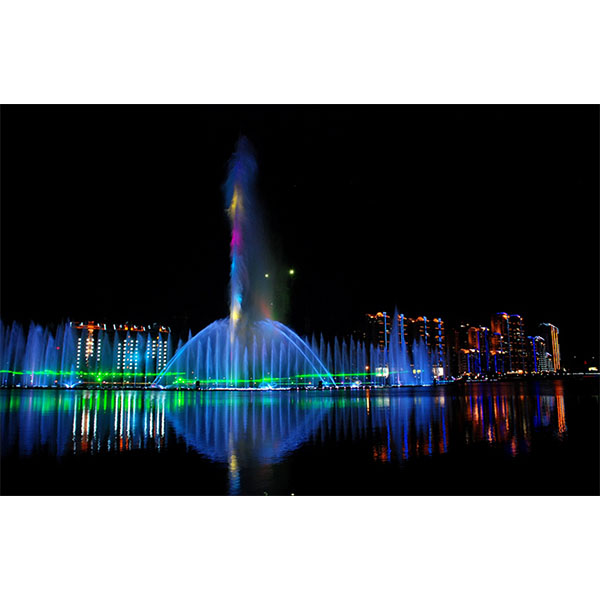
Musical fountains involve complex arrays of nozzles, lights, and actuators that move in synchronization with music. Each moving part requires a robust seal to prevent water ingress into the mechanical drive systems. Custom rotary seals and dynamic O-rings are used here to handle continuous motion and varying pressures. The reliability of these seals directly impacts the show’s uptime and visual quality.
Submersible Pump Systems
Submersible pumps are the heart of any water feature. Their motors are completely immersed in water, making shaft sealing critical. Mechanical face seals or lip seals are commonly used to prevent water from entering the motor housing while allowing the shaft to rotate. Custom designs optimize these seals for specific pump speeds and fluid viscosities, enhancing efficiency and lifespan.
Underwater Lighting and LED Arrays
LED lighting systems generate heat, which can degrade seals over time. Thermal management is integrated into the seal design to dissipate heat effectively. Additionally, the transparency of some housing materials requires seals that do not discolor or emit volatile compounds that could fog the lens. Silicone seals are often preferred for their optical clarity and thermal stability.
Marine and Aquatic Park Structures
In aquatic parks, seals are used in slide joints, wave machine mechanisms, and filtration systems. These environments involve high bather loads and intense chemical treatment. Seals must be non-toxic, resistant to harsh disinfectants, and capable of withstanding heavy mechanical loads. Custom formulations ensure compliance with health and safety regulations.
Common Mistakes in Underwater Sealing Selection
Even experienced procurers can make errors when specifying underwater seals. Avoiding these common pitfalls can save time and money.
- Ignoring Dynamic Factors: Treating a moving part like a static one leads to premature seal failure. Always account for motion type (rotary, reciprocating, oscillating).
- Overlooking Chemical Compatibility: Assuming all rubbers are the same. Chlorine, bromine, and ozone have specific effects on different polymers. Always verify compatibility charts.
- Neglecting Installation Tolerances: Poorly machined housing grooves can pinch or twist seals during installation. Precision machining is as important as the seal material itself.
- Underestimating Temperature Effects: Water temperature can fluctuate seasonally or due to equipment heat. Ensure the material’s glass transition temperature is well below the minimum operating temp.
Frequently Asked Questions (FAQ)
What is the typical lifespan of an underwater seal?
The lifespan varies based on material, operating conditions, and maintenance. High-quality custom seals made from Viton or EPDM can last 5 to 10 years in stable environments. However, in high-dynamic or chemically aggressive settings, annual inspection and replacement may be necessary.
Can existing equipment be retrofitted with custom seals?
Yes. Custom sealing solutions can be designed to fit existing housings. This involves reverse engineering the groove dimensions and selecting a material that offers improved performance over the original specification. Shenyang Feiya’s engineering team specializes in such retrofit projects to extend the life of older installations.
How do I determine the right IP rating for my project?
For most submerged applications, IP68 is sufficient. However, if the equipment is subject to high-pressure water jets or steam cleaning, IP69K is recommended. Consult with a sealing expert to evaluate the specific pressure and temperature conditions of your site.
Why choose a manufacturer with engineering capabilities?
A manufacturer with in-house engineering, like Shenyang Feiya, offers more than just products. They provide technical consultation, custom design, and validation testing. This holistic approach ensures that the sealing solution is optimized for the specific application, reducing the risk of failure and enhancing overall system reliability.
Conclusion: Securing Your Investment with Expert Sealing Solutions
Reliable underwater equipment sealing is not just a technical detail; it is a cornerstone of successful waterscape engineering. From preventing costly downtime to ensuring public safety, the quality of seals directly impacts the performance and longevity of aquatic installations. By choosing custom solutions tailored to specific environmental and mechanical demands, project owners can achieve superior results.
Shenyang Feiya Water Art Garden Engineering Co., Ltd. brings nearly two decades of expertise to every project. With a team of over 80 technicians, including senior engineers and professors, and a comprehensive infrastructure ranging from design departments to processing workshops, we deliver sealing solutions that stand the test of time. Our Grade A qualification and status as a trusted government contractor reflect our commitment to excellence and integrity.
Whether you are designing a new musical fountain or maintaining an existing aquatic facility, partnering with an experienced manufacturer ensures that your equipment remains protected against the elements. Do not leave your underwater systems to chance. Invest in custom sealing solutions backed by proven engineering expertise.
For detailed technical specifications, custom design consultations, or to discuss your specific project requirements, contact our engineering team today. Explore our related products and technical solutions to learn more about how we can support your next waterscape project.