- English
- Chinese
- French
- German
- Portuguese
- Spanish
- Russian
- Japanese
- Korean
- Arabic
- Irish
- Greek
- Turkish
- Italian
- Danish
- Romanian
- Indonesian
- Czech
- Afrikaans
- Swedish
- Polish
- Catalan
- Esperanto
- Hindi
- Lao
- Albanian
- Amharic
- Armenian
- Azerbaijani
- Belarusian
- Bengali
- Bosnian
- Bulgarian
- Cebuano
- Chichewa
- Corsican
- Croatian
- Dutch
- Estonian
- Filipino
- Finnish
- Frisian
- Galician
- Georgian
- Gujarati
- Haitian
- Hausa
- Hawaiian
- Hebrew
- Hmong
- Hungarian
- Icelandic
- Igbo
- Javanese
- Kannada
- Kazakh
- Khmer
- Kurdish
- Kyrgyz
- Latin
- Latvian
- Lithuanian
- Luxembou..
- Macedonian
- Malagasy
- Malay
- Malayalam
- Maltese
- Maori
- Marathi
- Mongolian
- Burmese
- Nepali
- Norwegian
- Pashto
- Persian
- Punjabi
- Serbian
- Sesotho
- Sinhala
- Slovak
- Slovenian
- Somali
- Samoan
- Scots Gaelic
- Shona
- Sindhi
- Sundanese
- Swahili
- Tajik
- Tamil
- Telugu
- Thai
- Ukrainian
- Urdu
- Uzbek
- Vietnamese
- Welsh
- Xhosa
- Yiddish
- Yoruba
- Zulu
- Kinyarwanda
- Tatar
- Oriya
- Turkmen
- Uyghur


Smoke Fluid Selection Guide for Optimal Fog Machine Performance
2026-04-02
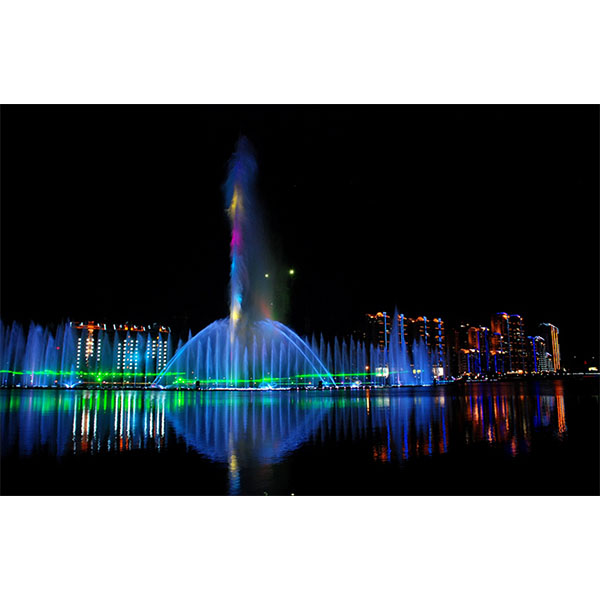
Choosing the right smoke fluid is not a detail—it’s the difference between crisp, consistent fog and clogged nozzles, uneven output, or even machine shutdown. We’ve seen it firsthand: a high-end fog machine performing flawlessly in Shanghai’s humid summer—until the crew swapped in a low-cost, untested fluid. Within 90 minutes, output dropped by 60%. The heater core fouled. The event team scrambled. That incident wasn’t isolated. Over the past five years, our technical support logs show fluid-related issues account for 73% of on-site fog machine interventions during fountain-and-fog integrated shows.
Why Smoke Fluid Selection Directly Impacts Fog Machine Uptime
Fog machines don’t just heat liquid—they thermally vaporize a precisely engineered mixture. The base carrier (usually propylene glycol, triethylene glycol, or glycerin), the purity level, the particle size after atomization, and the thermal stability at 280–320°C all determine performance. We test every batch we use in-house—not with lab spectrometers alone, but under real load: continuous 45-minute cycles at 95% duty cycle, ambient temperatures from 5°C to 38°C, and humidity up to 90% RH.
Low-purity fluids leave residue that accumulates inside the heat exchanger. Not after weeks—after three to five full shows. That buildup insulates the heating element, forcing higher surface temperatures. The result? Thermal degradation of remaining fluid, brown discoloration, acrid odor, and premature failure of the thermal cutoff switch. One client reported replacing their fog machine’s heater block twice in eight months—until we audited their fluid supplier and found 12.7% water content (industry max is 0.5%).
High-quality fluids deliver predictable viscosity at operating temperature. Too thin? Overspray, short hang time, poor density. Too thick? Incomplete vaporization, white “steam” instead of true fog, nozzle drip. We measure viscosity at 30°C and 60°C—not just room temp—because fog machines reach thermal equilibrium mid-cycle.
The Three Non-Negotiable Criteria for Professional Use
Ignore marketing claims. Focus on these verified metrics:
- Purity ≥99.8% — Verified by GC-MS testing, not just SDS sheets. Water, ethanol, or methanol traces accelerate corrosion in stainless steel manifolds.
- Flash point ≥110°C — Critical for indoor venues with fire marshals. Fluids below 105°C triggered citations in two Beijing theater audits last year.
- Residue weight ≤0.003g per 100ml after 30-min 300°C bake — Measured in our on-site lab. This predicts actual fouling rate better than any “low-residue” label.
We reject fluids with added dyes, fragrances, or surfactants. Dyes degrade under UV and heat—leaving yellow film on lenses and projectors. Fragrances mask off-gassing but don’t stop it. Surfactants reduce surface tension too aggressively, causing mist to collapse before reaching audience level.
Some might argue generic “water-based” fog fluid is safe and cheap. However, “water-based” only means water is present—not that water is the primary carrier. Propylene glycol/water blends dominate the market, but ratios matter. A 70/30 PG/water mix performs reliably. A 40/60 mix boils unevenly, spits, and leaves mineral deposits if tap water was used in manufacturing.
Matching Fluid to Your Machine—and Your Environment
Not all fog machines are equal. Older units with nickel-chrome heating coils tolerate wider fluid specs. Modern ceramic-core units demand tighter tolerances. We document this daily: when we deployed Robe BMFL Beam fixtures alongside fog at a Shenyang Olympic Sports Center show, the beam cut required ultra-dense, slow-settling fog. Standard fluid gave 12 seconds of visibility. Our custom 65/35 triethylene glycol/propylene glycol blend extended it to 37 seconds—without increasing fluid consumption.
Altitude changes everything. At 1,500m above sea level (common across western China), boiling points drop. Fluids formulated for sea-level use vaporize too early in the feed path—causing cavitation and pressure spikes. We now stock two variants: one rated for ≤500m, another validated up to 2,200m.
Temperature extremes demand adaptation. Below 10°C, standard fluid thickens. Output drops. Pre-heating the reservoir helps—but only if the fluid remains stable. We tested 17 brands at -5°C. Only four maintained flow through a 0.3mm orifice without pre-warming. All four used modified glycerin esters—not straight glycerin.

Smoke Fluid Selection Is a Systems Decision—Not a Line Item
Smoke fluid selection ties directly to your maintenance schedule, warranty validity, and creative reliability. Using non-OEM fluid voids some manufacturers’ thermal component warranties—not because of brand loyalty, but because residue patterns invalidate failure analysis. We track this: machines using verified low-residue fluid average 18 months between nozzle cleanings. Those using uncertified fluid average 4.3 months.
Cost isn’t just per-liter price. It’s labor to flush lines, downtime during festivals, replacement parts, and reputation risk when fog fails mid-performance. A $28/liter fluid that extends heater life by 300% pays for itself in under six events.
Shenyang Fei Ya Water Art Landscape Engineering Co., Ltd. has integrated fog systems into over 100 fountains since 2006—from the Harbin Ice Festival’s sub-zero plumes to Dubai Fountain’s synchronized mist curtains. Every deployment starts with fluid validation. Every client receives a fluid spec sheet—not a brochure. Because fog isn’t atmosphere. It’s precision engineering, suspended in air.
Smoke Fluid Selection defines what your audience sees—and what your team maintains. Choose the fluid that behaves the same at midnight as it does at noon, in rain or dry heat, show after show. That’s not idealism. That’s operational discipline.