- English
- Chinese
- French
- German
- Portuguese
- Spanish
- Russian
- Japanese
- Korean
- Arabic
- Irish
- Greek
- Turkish
- Italian
- Danish
- Romanian
- Indonesian
- Czech
- Afrikaans
- Swedish
- Polish
- Catalan
- Esperanto
- Hindi
- Lao
- Albanian
- Amharic
- Armenian
- Azerbaijani
- Belarusian
- Bengali
- Bosnian
- Bulgarian
- Cebuano
- Chichewa
- Corsican
- Croatian
- Dutch
- Estonian
- Filipino
- Finnish
- Frisian
- Galician
- Georgian
- Gujarati
- Haitian
- Hausa
- Hawaiian
- Hebrew
- Hmong
- Hungarian
- Icelandic
- Igbo
- Javanese
- Kannada
- Kazakh
- Khmer
- Kurdish
- Kyrgyz
- Latin
- Latvian
- Lithuanian
- Luxembou..
- Macedonian
- Malagasy
- Malay
- Malayalam
- Maltese
- Maori
- Marathi
- Mongolian
- Burmese
- Nepali
- Norwegian
- Pashto
- Persian
- Punjabi
- Serbian
- Sesotho
- Sinhala
- Slovak
- Slovenian
- Somali
- Samoan
- Scots Gaelic
- Shona
- Sindhi
- Sundanese
- Swahili
- Tajik
- Tamil
- Telugu
- Thai
- Ukrainian
- Urdu
- Uzbek
- Vietnamese
- Welsh
- Xhosa
- Yiddish
- Yoruba
- Zulu
- Kinyarwanda
- Tatar
- Oriya
- Turkmen
- Uyghur


Park Lighting Project Solutions | China Manufacturer
2026-10-20
- What Defines a High-Quality Park Lighting Project?
- Strategic Design Principles for Public Green Spaces
- Technical Specifications and Equipment Selection
- Implementation Process: From Concept to Commissioning
- Common Challenges in Park Lighting Projects and Solutions
- Why Choose Shenyang Feiya for Your Park Lighting Project?
- Frequently Asked Questions (FAQ)
- Conclusion: Elevating Public Spaces with Professional Lighting Solutions
A park lighting project involves the strategic design, engineering, and installation of illumination systems within public green spaces to enhance safety, aesthetics, and ecological balance. Successful execution requires integrating high-efficiency LED fixtures, smart control systems, and landscape architecture. As a specialized manufacturer, Shenyang Feiya Water Art Garden Engineering Co., Ltd. combines over 15 years of waterscape and greening expertise to deliver comprehensive lighting solutions that meet international standards for durability, energy efficiency, and visual impact.
What Defines a High-Quality Park Lighting Project?
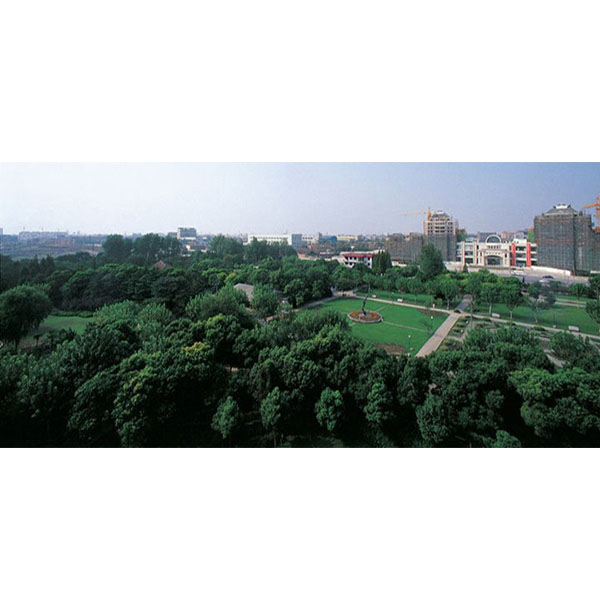
Park lighting is not merely about installing poles and bulbs. It is a complex engineering discipline that balances human-centric design with environmental stewardship. A high-quality park lighting project addresses three core dimensions: functional visibility, aesthetic enhancement, and ecological responsibility.
In modern urban planning, parks serve as community hubs. The lighting system must ensure pedestrian safety without creating light pollution that disrupts local wildlife or neighboring residents. This requires precise photometric calculations and careful fixture selection.
Core Components of Park Illumination Systems
- Luminaires: High-efficiency LED fixtures with specific beam angles (narrow for accent, wide for area lighting) and appropriate IP ratings (IP65 or higher) for weather resistance.
- Poles and Mounting Hardware: Corrosion-resistant materials such as hot-dip galvanized steel or aluminum, designed to withstand wind loads and harsh weather conditions.
- Control Systems: Smart controllers enabling dimming, scheduling, and remote monitoring to optimize energy consumption.
- Power Distribution: Underground cabling, junction boxes, and transformers configured for safety and ease of maintenance.
Shenyang Feiya Water Art Garden Engineering Co., Ltd. approaches these components with an engineer’s mindset. Since 2006, our team has managed over 100 large-scale projects, understanding that the longevity of a park lighting system depends on the synergy between electrical engineering and landscape integration.
Strategic Design Principles for Public Green Spaces
Effective park lighting design follows a hierarchical approach. It begins with a master plan that identifies key zones: pathways, recreational areas, water features, and vegetation clusters. Each zone has distinct lighting requirements.
1. Safety and Navigation Lighting
The primary function of park lighting is to ensure safe movement. Pathways must be illuminated uniformly to prevent tripping hazards and enhance security. Uniformity ratio is a critical metric here; significant differences in brightness can cause eye strain and reduce visibility.
We utilize low-glare fixtures mounted at heights between 3 to 6 meters for pedestrian paths. This height ensures adequate spread while minimizing light trespass into adjacent residential areas. Our engineering department employs advanced simulation software to model light distribution before installation, ensuring compliance with international illuminance standards.
2. Aesthetic and Accent Lighting
Beyond safety, lighting transforms the park’s nighttime identity. Accent lighting highlights architectural features, sculptures, and mature trees. This layer adds depth and character to the landscape.
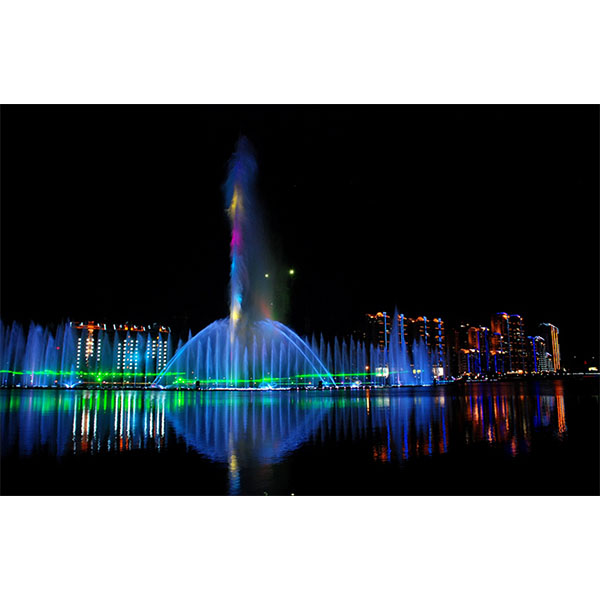
For water features, such as the fountains and waterscapes Shenyang Feiya specializes in, underwater LED lights create dynamic visual effects. The interaction between light and water requires specialized fixtures with high ingress protection (IP68) and corrosion-resistant housings. Our experience in building over 100 fountains globally allows us to integrate lighting seamlessly into water dynamics, enhancing the visual appeal without compromising equipment safety.
3. Ecological Considerations and Dark Sky Compliance
Modern park projects must adhere to “Dark Sky” principles. Excessive upward light contributes to skyglow and disrupts nocturnal ecosystems. We prioritize fully shielded fixtures that direct light downward where it is needed.
Furthermore, color temperature plays a vital role. Warmer color temperatures (2700K–3000K) are less disruptive to wildlife and human circadian rhythms compared to cool white light (4000K+). Our design team selects spectra that minimize blue-light emission, supporting biodiversity while maintaining visual clarity.
Technical Specifications and Equipment Selection
Selecting the right equipment is crucial for the long-term success of a park lighting project. Factors such as lumen maintenance, thermal management, and material durability determine the total cost of ownership.
| Component | Recommended Specification | Benefit |
|---|---|---|
| LED Chip | Brand-name chips (e.g., Cree, Osram, Philips) | High luminous efficacy (>130 lm/W) and consistent color rendering (CRI >80). |
| Driver | Constant current, surge protection (10kV) | Ensures stable operation and protects against lightning strikes. |
| Housing Material | Die-cast aluminum with powder coating | Excellent heat dissipation and resistance to UV degradation and corrosion. |
| Lens/Optic | Tempered glass with anti-reflective coating | Maximizes light transmission and protects internal components. |
| IP Rating | IP65 for above-ground, IP68 for underwater | Prevents dust ingress and water damage in harsh outdoor environments. |
At Shenyang Feiya, our well-equipped laboratory and equipment processing workshop allow us to test these specifications rigorously. We do not rely solely on supplier data; we verify performance under simulated environmental conditions. This commitment to quality control is part of why we achieved Grade A qualification from the China Waterscape Fountain Committee in 2008.
Implementation Process: From Concept to Commissioning
Executing a park lighting project requires coordinated efforts across design, procurement, and construction phases. Our integrated model, combining design and construction, streamlines this process.
Step 1: Site Analysis and Master Planning
Our engineers conduct thorough site surveys to assess topography, existing vegetation, and power availability. We identify key viewpoints and user pathways. This data informs the initial lighting layout, ensuring that fixtures complement rather than clash with the landscape.
Step 2: Photometric Simulation and Design
Using specialized software, we create 3D models of the park. We simulate light levels, uniformity, and glare indices. This step allows stakeholders to visualize the outcome and make adjustments before any physical work begins. It reduces the risk of costly changes during installation.
Step 3: Procurement and Custom Fabrication
With approved designs, we source components from trusted suppliers. For unique projects, our equipment processing workshop fabricates custom poles and mounts. This capability ensures that structural elements match the aesthetic theme of the park, whether modern, classical, or ecological.
Step 4: Installation and Electrical Integration
Our team of over 50 construction workers and 80+ technicians manages the installation. We follow strict safety protocols for trenching, cabling, and pole erection. Special attention is paid to grounding and surge protection to safeguard the system against electrical faults.
Step 5: Testing, Commissioning, and Handover
Post-installation, we conduct comprehensive testing. This includes measuring actual illuminance levels, checking control system functionality, and verifying safety standards. We provide detailed documentation and training for park maintenance staff, ensuring sustainable operation.
Common Challenges in Park Lighting Projects and Solutions
Even well-planned projects face challenges. Understanding these pitfalls helps in mitigating risks.
Challenge 1: Vandalism and Theft
Parks are public spaces, making fixtures vulnerable to vandalism. Solution: Use tamper-proof hardware, install fixtures at inaccessible heights where possible, and use robust materials like reinforced polycarbonate or tempered glass. Integrating lighting into architectural elements can also reduce exposure.
Challenge 2: Maintenance Accessibility
Remote or densely planted areas can be difficult to access for repairs. Solution: Design modular systems that allow easy component replacement. Ensure clear access paths for maintenance vehicles. Implement smart monitoring systems that alert staff to failures, reducing the need for routine patrols.
Challenge 3: Energy Costs
Operating lights throughout the night can be expensive. Solution: Incorporate motion sensors and adaptive lighting controls. Dim lights during low-traffic hours (e.g., midnight to 5 AM). Use solar-powered fixtures for remote areas where grid connection is costly.
Why Choose Shenyang Feiya for Your Park Lighting Project?
Shenyang Feiya Water Art Garden Engineering Co., Ltd. is not just a supplier; we are a design-and-build enterprise with deep roots in landscape engineering. Our unique value proposition lies in our holistic approach to outdoor environments.
Integrated Expertise in Waterscape and Greening
Lighting does not exist in isolation. It interacts with water, plants, and hardscape. With over 15 years of experience in fountain and greening projects, we understand these interactions intimately. Our team includes 15 senior engineers, including professor-level experts and water jet specialists. This multidisciplinary expertise ensures that lighting enhances the entire ecosystem, not just individual elements.
Proven Track Record and Reliability
Since 2006, we have completed more than 100 large and medium-sized projects domestically and internationally. Our consistent production value exceeding 10 million annually reflects our capacity and reliability. Being recognized as an advanced taxpayer and a contract-keeping enterprise by the Shenyang Municipal Government underscores our commitment to ethical business practices and financial stability.
Comprehensive Resources and Infrastructure
Our infrastructure supports end-to-end project delivery. We operate six specialized departments, including design, engineering, and operations. Our facilities include a fountain demonstration room, sprinkler irrigation display, and equipment processing workshop. This vertical integration allows us to control quality at every stage, from concept to commissioning.
Commitment to Ecological Landscape Construction
We adhere to the principle of ecological balance. Our landscaping philosophy integrates garden construction with environmental science. We use plant materials strategically to create sustainable, human-centric environments. This approach aligns perfectly with modern park lighting goals, which prioritize sustainability and ecological harmony.
Frequently Asked Questions (FAQ)
What is the typical lifespan of park lighting fixtures?
High-quality LED fixtures typically last 50,000 to 100,000 hours. However, external factors like weather, voltage fluctuations, and maintenance practices affect actual lifespan. Proper thermal management and surge protection can extend service life significantly.
How much does a park lighting project cost?
Costs vary based on park size, fixture quality, and complexity of design. Key cost drivers include the number of poles, type of control systems, and civil works required for cabling. A detailed quote requires a site-specific design proposal.
Can existing park lighting be upgraded to LED?
Yes, retrofitting is common. It involves replacing old lamps with LED modules and upgrading drivers. In some cases, poles and wiring may need inspection or replacement to ensure compatibility and safety. Retrofitting can reduce energy consumption by up to 50-70%.
What certifications should I look for in a lighting manufacturer?
Look for ISO 9001 (Quality Management), CE (European Conformity), UL (Underwriters Laboratories), and IP ratings (Ingress Protection). For waterscape-integrated lighting, additional certifications for electrical safety in wet environments are crucial. Shenyang Feiya holds Grade A qualification from the China Waterscape Fountain Committee, reflecting our adherence to high industry standards.
How do smart controls benefit park lighting?
Smart controls enable remote monitoring, scheduling, and dimming. They allow park managers to adjust lighting levels based on time of day or activity, reducing energy waste. They also provide instant alerts for faults, speeding up maintenance response times.
Conclusion: Elevating Public Spaces with Professional Lighting Solutions
A successful park lighting project transforms public spaces into safe, vibrant, and ecologically responsible environments. It requires a blend of technical precision, artistic vision, and engineering reliability. By choosing a partner with integrated design and construction capabilities, you ensure that every element—from the pole to the photon—works in harmony.
Shenyang Feiya Water Art Garden Engineering Co., Ltd. brings decades of specialized experience in waterscape and greening to every lighting project. Our team of senior engineers, robust infrastructure, and commitment to ecological principles make us an ideal partner for municipalities, developers, and landscape architects seeking premium outdoor illumination solutions.
Whether you are planning a new urban park, renovating an existing green space, or integrating lighting with water features, our expertise ensures a result that is both visually stunning and technically sound.
Ready to illuminate your next project? Contact our engineering team today for a customized consultation and design proposal. Let us help you create a safer, brighter, and more beautiful environment.
Explore Our Park Lighting Solutions and Technical Specifications