- English
- Chinese
- French
- German
- Portuguese
- Spanish
- Russian
- Japanese
- Korean
- Arabic
- Irish
- Greek
- Turkish
- Italian
- Danish
- Romanian
- Indonesian
- Czech
- Afrikaans
- Swedish
- Polish
- Catalan
- Esperanto
- Hindi
- Lao
- Albanian
- Amharic
- Armenian
- Azerbaijani
- Belarusian
- Bengali
- Bosnian
- Bulgarian
- Cebuano
- Chichewa
- Corsican
- Croatian
- Dutch
- Estonian
- Filipino
- Finnish
- Frisian
- Galician
- Georgian
- Gujarati
- Haitian
- Hausa
- Hawaiian
- Hebrew
- Hmong
- Hungarian
- Icelandic
- Igbo
- Javanese
- Kannada
- Kazakh
- Khmer
- Kurdish
- Kyrgyz
- Latin
- Latvian
- Lithuanian
- Luxembou..
- Macedonian
- Malagasy
- Malay
- Malayalam
- Maltese
- Maori
- Marathi
- Mongolian
- Burmese
- Nepali
- Norwegian
- Pashto
- Persian
- Punjabi
- Serbian
- Sesotho
- Sinhala
- Slovak
- Slovenian
- Somali
- Samoan
- Scots Gaelic
- Shona
- Sindhi
- Sundanese
- Swahili
- Tajik
- Tamil
- Telugu
- Thai
- Ukrainian
- Urdu
- Uzbek
- Vietnamese
- Welsh
- Xhosa
- Yiddish
- Yoruba
- Zulu
- Kinyarwanda
- Tatar
- Oriya
- Turkmen
- Uyghur

How to Choose the Right Largest Musical Fountain Manufacturer for Your Project
2026-11-15
- Understanding the Complexity of Large-Scale Musical Fountains
- Key Technical Criteria for Evaluating Fountain Manufacturers
- Assessing Manufacturer Capability and Experience
- Industry Accreditations and Compliance Standards
- The Importance of After-Sales Support and Maintenance
- Comparing Potential Suppliers: A Decision Framework
- Conclusion: Making the Right Choice for Your Project
Summary Selecting the right manufacturer for a large-scale musical fountain requires evaluating technical expertise, engineering capacity, and proven project execution. This guide outlines critical criteria for assessing suppliers, including hydraulic system design, synchronization technology, and maintenance support. It highlights the importance of choosing partners with verified credentials, such as Grade A qualifications and a track record of successful municipal installations, to ensure aesthetic excellence and long-term operational reliability.
Understanding the Complexity of Large-Scale Musical Fountains
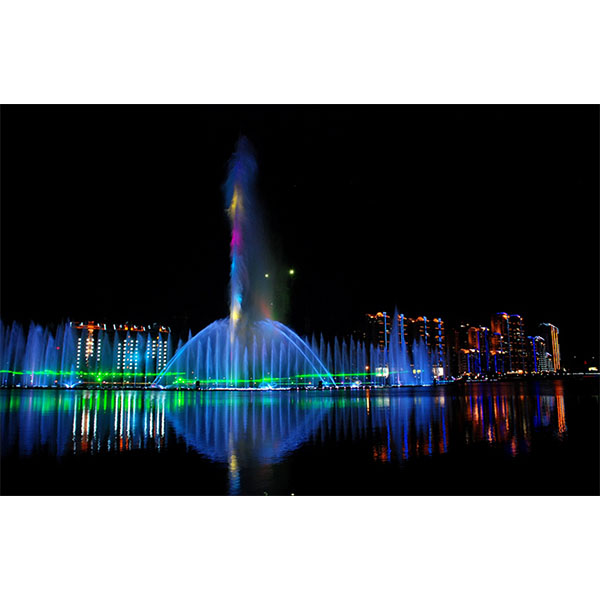
A musical fountain is not merely a water feature; it is a complex integration of hydraulics, electronics, lighting, and software engineering. When planning a project involving the largest musical fountain designs, stakeholders must recognize that the scale amplifies every technical challenge. A small error in nozzle alignment or pump synchronization that might be negligible in a residential pool can result in catastrophic structural failure or performance issues in a municipal landmark.
The core appeal of a large musical fountain lies in its ability to transform water into a dynamic artistic medium. This transformation relies on the precise coordination of high-pressure water jets, programmable logic controllers (PLCs), and DMX-controlled lighting systems. The “music” is not just background audio; it is the driving algorithm that dictates the height, angle, and intensity of every water jet in real-time. Therefore, the manufacturer you choose must possess deep expertise in both fluid dynamics and digital signal processing.
For city planners, developers, and procurement officers, the decision to commission a large-scale fountain is a significant capital investment. The goal is to create a lasting icon that enhances urban aesthetics, drives tourism, and provides community value. However, without the right technical partner, these projects can suffer from frequent breakdowns, high energy consumption, and poor visual impact. Understanding the underlying technology is the first step in making an informed supplier selection.
Key Technical Criteria for Evaluating Fountain Manufacturers
When vetting potential suppliers for a major waterscape project, technical capability is the primary differentiator. Not all fountain companies are equipped to handle the demands of large-scale installations. Below are the critical technical dimensions you must assess.
Hydraulic System Design and Precision
The heart of any musical fountain is its hydraulic system. For large installations, this involves high-pressure pumps, specialized nozzles, and intricate piping networks. A competent manufacturer must demonstrate proficiency in computational fluid dynamics (CFD) to simulate water behavior before construction begins. This ensures that the water jets achieve the desired height and shape without excessive energy waste.
Key components to evaluate include:
- Nozzle Technology: Look for manufacturers who use precision-machined stainless steel nozzles. The quality of the nozzle determines the clarity and stability of the water column. Poor-quality nozzles produce misty, irregular streams that look unprofessional under lighting.
- Pump Efficiency: Large fountains consume significant power. Top-tier manufacturers prioritize energy-efficient pump systems, often incorporating variable frequency drives (VFDs) to adjust pressure dynamically based on the choreography. This reduces operational costs and extends equipment lifespan.
- Piping and Filtration: The infrastructure must withstand constant pressure fluctuations. High-quality projects use durable materials like SS304 or SS316L stainless steel for all submerged components to resist corrosion. Additionally, robust filtration systems are essential to prevent clogging, which can disrupt synchronized performances.
Synchronization and Control Systems
The “musical” aspect of the fountain depends on the control system’s ability to interpret audio signals and translate them into mechanical actions with millisecond precision. Latency or jitter in the system can cause the water to fall out of sync with the music, breaking the immersive experience.
Advanced manufacturers utilize proprietary or highly customized software that allows for complex choreography. This software should support:
- Real-time Audio Analysis: The system should automatically adjust water heights and light colors based on the frequency and amplitude of the music.
- Manual Choreography Tools: For specific artistic visions, engineers should be able to manually program sequences, ensuring that key musical moments are highlighted by dramatic water effects.
- Redundancy and Safety: In large public spaces, safety is paramount. Control systems must include fail-safes that shut down high-pressure jets if sensors detect anomalies, such as unauthorized entry into the fountain area or system malfunctions.
Lighting Integration and Visual Impact
Lighting transforms a daytime water display into a nighttime spectacle. For the largest musical fountain projects, lighting is not an afterthought but an integral part of the design. The manufacturer must have expertise in integrating underwater LED fixtures that are both bright enough to illuminate high water columns and durable enough to withstand submersion.
Consider the following lighting factors:
- Color Consistency: High-quality LEDs provide consistent color temperature and brightness across thousands of units. Cheap alternatives may fade or shift color over time, leading to a patchy appearance.
- Heat Dissipation: Underwater LEDs generate heat that must be effectively dissipated to prevent premature failure. Look for manufacturers who use advanced thermal management techniques in their fixture design.
- Sync with Water: The lighting control system must be perfectly synchronized with the hydraulic system. A delay between the water jet rising and the light changing color can ruin the visual effect.
Assessing Manufacturer Capability and Experience
Technical specifications on paper do not guarantee successful execution. The ability to deliver a large-scale project on time, within budget, and to the required quality standards depends on the manufacturer’s operational capacity and historical performance.
Project Portfolio and Case Studies
A reliable manufacturer will have a diverse portfolio of completed projects, particularly those of similar scale and complexity. When reviewing case studies, look for details beyond just photos. Seek information on:
- Project Scale: Has the company handled projects with similar water volumes, pump capacities, and control complexity?
- Environmental Conditions: Experience with projects in varying climates (e.g., freezing winters, high humidity, or saline environments) indicates adaptability and robust engineering.
- Client Testimonials: Feedback from municipal governments or commercial developers can provide insights into the manufacturer’s professionalism, communication, and post-installation support.
For instance, a manufacturer with a track record of delivering high-profile municipal landmarks demonstrates the ability to navigate complex regulatory environments and manage large teams. Projects like the Dalian International Flower Center Music Fountain, which involved significant investment and customized design, serve as benchmarks for what a capable enterprise can achieve. Such projects require not just technical skill but also rigorous project management and adherence to strict timelines.
Engineering Team and Expertise
The depth of a manufacturer’s technical team is a strong indicator of their capability. Large-scale fountains require multidisciplinary expertise, including hydraulic engineers, electrical engineers, software developers, and landscape architects.
Look for companies that employ senior engineers with recognized industry standing. For example, firms with professor-level senior engineers or nationally recognized experts in water jet technology are better positioned to solve unique engineering challenges. A team structure that includes dedicated specialists for design, fabrication, installation, and commissioning ensures that each phase of the project receives focused attention.
Moreover, the presence of certified construction workers and green engineers suggests a commitment to quality and sustainability. This holistic approach ensures that the fountain not only looks good but also integrates seamlessly with the surrounding landscape and adheres to ecological principles.
Production and Quality Assurance Infrastructure
Vertical integration is a significant advantage in the fountain industry. Manufacturers who control the entire production process—from design and component fabrication to assembly and testing—can ensure higher quality and faster response times.
Key infrastructure elements to verify include:
- In-House Fabrication Workshops: Dedicated facilities for machining nozzles, assembling pump stations, and constructing control cabinets allow for stricter quality control.
- Testing Laboratories: A well-equipped lab for system testing and validation enables the manufacturer to simulate operating conditions before shipping. This reduces the risk of on-site failures.
- Demonstration Facilities: A fully equipped fountain demonstration room allows clients to witness the technology in action. It also serves as a training ground for technicians and a showcase for new innovations.
Companies that maintain consistent annual production values and have established quality assurance procedures aligned with national technical specifications demonstrate stability and reliability. This operational consistency is crucial for long-term projects where supply chain disruptions or quality inconsistencies can cause significant delays.
Industry Accreditations and Compliance Standards
In the B2B sector, especially for public infrastructure projects, compliance and accreditation are non-negotiable. Choosing a manufacturer with recognized certifications mitigates risk and ensures that the project meets legal and safety standards.
National and Industry Certifications
Look for manufacturers who hold top-tier industry qualifications. In China, for example, the Grade A qualification from the China Waterscape Fountain Committee is the highest accreditation for fountain engineering enterprises. This certification signifies that the company has met rigorous standards for technical capability, financial stability, and project management.
Other important indicators include:
- Government Recognition: Being designated as a trustworthy contractor by municipal governments reflects a history of compliant and reliable performance.
- ISO Certifications: ISO 9001 for quality management and ISO 14001 for environmental management are standard benchmarks for professional enterprises.
- Safety Standards: Compliance with electrical safety standards (such as IEC or local equivalents) is critical for public installations to prevent accidents.
Leadership involvement in industry bodies also speaks to a company’s reputation. For instance, when key executives serve on standing committees of professional associations, it indicates that the company is actively contributing to industry standardization and best practices. This level of engagement often translates to higher ethical standards and a commitment to long-term industry health.
Ecological and Sustainable Design Principles
Modern urban development prioritizes sustainability. A forward-thinking manufacturer will integrate ecological principles into their fountain designs. This includes water conservation strategies, energy-efficient systems, and the use of environmentally friendly materials.
Sustainable practices may involve:
- Water Recycling Systems: Advanced filtration and treatment systems that minimize water loss through evaporation and splash.
- Energy-Efficient Lighting: Use of low-power, high-output LED systems with smart controls to reduce electricity consumption.
- Eco-Friendly Materials: Selection of materials that are durable, recyclable, and non-toxic to local ecosystems.
Companies that adhere to the principle of “ecological garden construction” demonstrate a holistic understanding of urban environmental enhancement. They view the fountain not as an isolated object but as part of a larger ecological system, contributing to biodiversity and environmental quality.
The Importance of After-Sales Support and Maintenance
A musical fountain is a living system that requires regular maintenance to perform optimally. The relationship with your manufacturer should not end at handover. Long-term support is crucial for protecting your investment.
Maintenance Contracts and Training
Reputable manufacturers offer comprehensive after-sales services, including:
- On-Site Training: Training your local team on routine maintenance, troubleshooting, and safety protocols.
- Remote Monitoring: Some advanced systems allow for remote diagnostics, enabling technicians to identify and resolve issues before they escalate.
- Spare Parts Availability: Guaranteed access to genuine spare parts ensures that repairs can be made quickly, minimizing downtime.
Clear contractual commitments regarding response times and service levels provide peace of mind. Transparent project management and responsive client engagement are hallmarks of a reliable partner. Companies with a proven track record of post-commissioning support demonstrate their confidence in the durability and performance of their systems.
Long-Term Operational Resilience
Designing for maintainability is as important as designing for aesthetics. A well-designed fountain allows easy access to pumps, nozzles, and lights for inspection and repair. Manufacturers who prioritize long-term maintainability in their design phase save clients significant costs and headaches in the future.
Consider the lifecycle cost of the fountain, not just the initial installation price. A slightly higher upfront cost for a system built with higher quality materials and better engineering can result in lower operational and maintenance costs over ten or twenty years. This total cost of ownership perspective is essential for prudent financial planning.
Comparing Potential Suppliers: A Decision Framework
To streamline the selection process, use a structured evaluation framework. The following table outlines key comparison points for prospective manufacturers.
| Evaluation Criterion | High-Quality Manufacturer | Low-Quality Manufacturer |
|---|---|---|
| Technical Expertise | In-house R&D, senior engineers, CFD simulation capabilities | Outsourced design, generic solutions, limited engineering staff |
| Project Portfolio | Proven track record of large-scale, complex projects | Few references, mostly small residential projects |
| Production Capacity | Vertical integration, in-house fabrication, testing labs | Reliance on third-party suppliers, no quality control facilities |
| Accreditations | Grade A qualifications, ISO certifications, government recognition | Minimal or no formal certifications |
| After-Sales Support | Comprehensive maintenance plans, training, spare parts guarantee | Limited support, no long-term service commitment |
| Sustainability | Eco-friendly designs, energy-efficient systems, water recycling | Standard designs with no focus on environmental impact |
Use this framework to score each potential supplier. Prioritize manufacturers who score highly in technical expertise and production capacity, as these are the foundations of a successful project. Accreditations and portfolio strength serve as validation of these capabilities.
Conclusion: Making the Right Choice for Your Project
Choosing the right manufacturer for the largest musical fountain is a strategic decision that impacts the aesthetic, functional, and financial success of your project. It requires a thorough evaluation of technical capabilities, operational capacity, and long-term support structures. By prioritizing partners with proven expertise, robust infrastructure, and recognized accreditations, you mitigate risk and ensure a high-quality outcome.
Remember that a musical fountain is a long-term asset. The initial selection of a supplier sets the tone for the entire lifecycle of the installation. Look for partners who share your vision for excellence and sustainability, and who have the technical depth to bring that vision to life. Companies like Shenyang Fei Ya Water Art Landscape Engineering Co., Ltd., with their Grade A qualifications, extensive project history, and integrated service model, exemplify the type of partner capable of delivering such complex engineering feats. Their commitment to ecological design and technical standardization offers a blueprint for what modern waterscape engineering should achieve.
For further information on integrated waterscape solutions and to explore how professional design-and-construction enterprises can enhance your urban environment, visit our homepage. Engaging with a qualified provider early in the planning process can help refine your requirements and ensure that your final installation stands as a testament to both artistic vision and engineering precision.